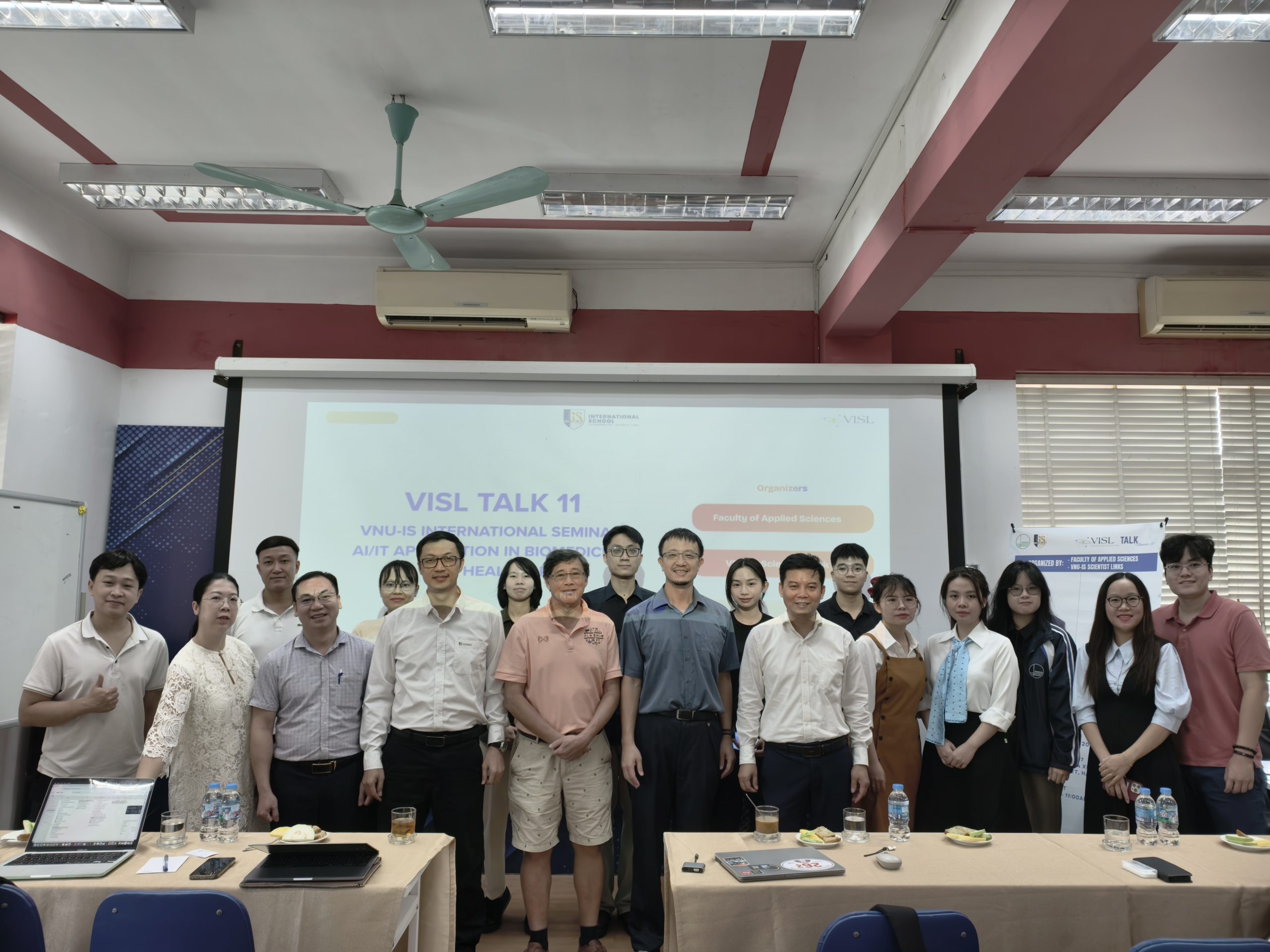
On 21 September 2026, the Faculty of Applied Sciences at International School – Vietnam National University, Hanoi (VNU-IS), hosted an international seminar with experts from National Cheng Kung University (NCKU), Taiwan (China). The scientists presented new research directions in applying artificial intelligence (AI) to biomedicine and healthcare.
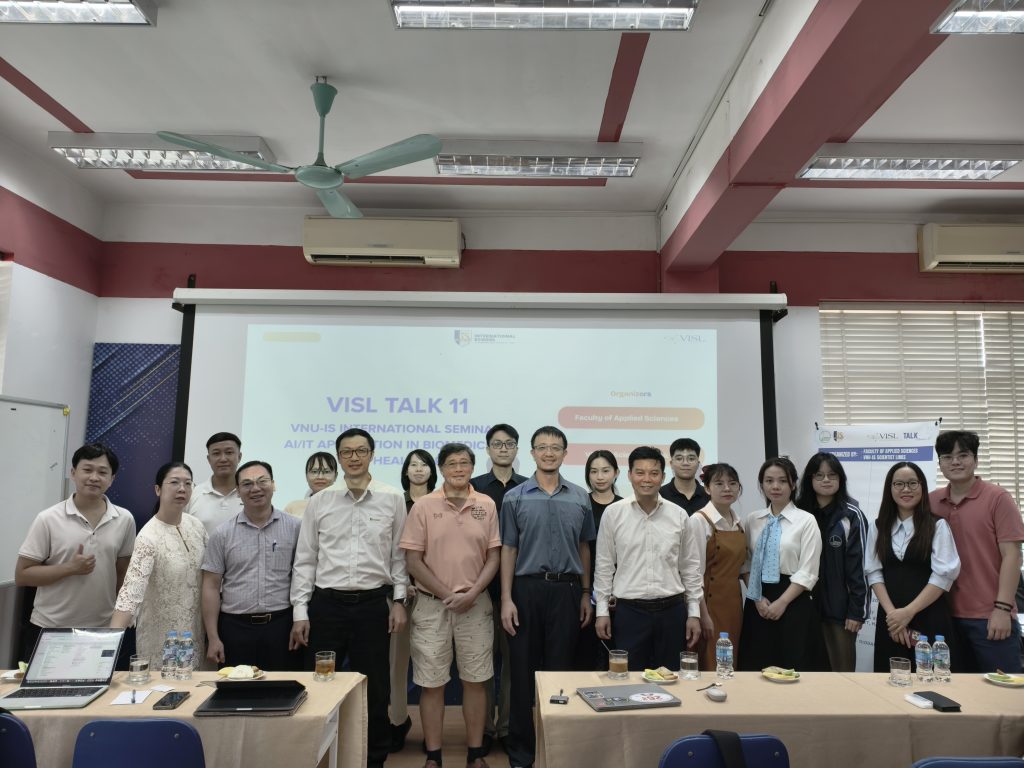
Two professors from Taiwan (China) attended and spoke at the international seminar.
The event was attended by Prof. Chia-Ching Wu, Department of Biology and Anatomy and Vice Director of the International Center for Wound Repair and Regeneration, NCKU; Prof. Chia Chu Chen, Department of Applied Physics, NCKU; Assoc. Prof. Chu Dinh Toi, Dean of the Faculty of Applied Sciences, VNU-IS; Dr. Ha Manh Hung, Vice Dean of the Faculty of Applied Sciences, VNU-IS; and Prof. Nguyen Duc Thuan, Specialist at the Faculty of Applied Sciences, VNU-IS. The seminar drew strong interest from lecturers, staff, students and PhD candidates of the Faculty of Applied Sciences, as well as members of the VNU Strong Research Group of Biomedicine and Health.
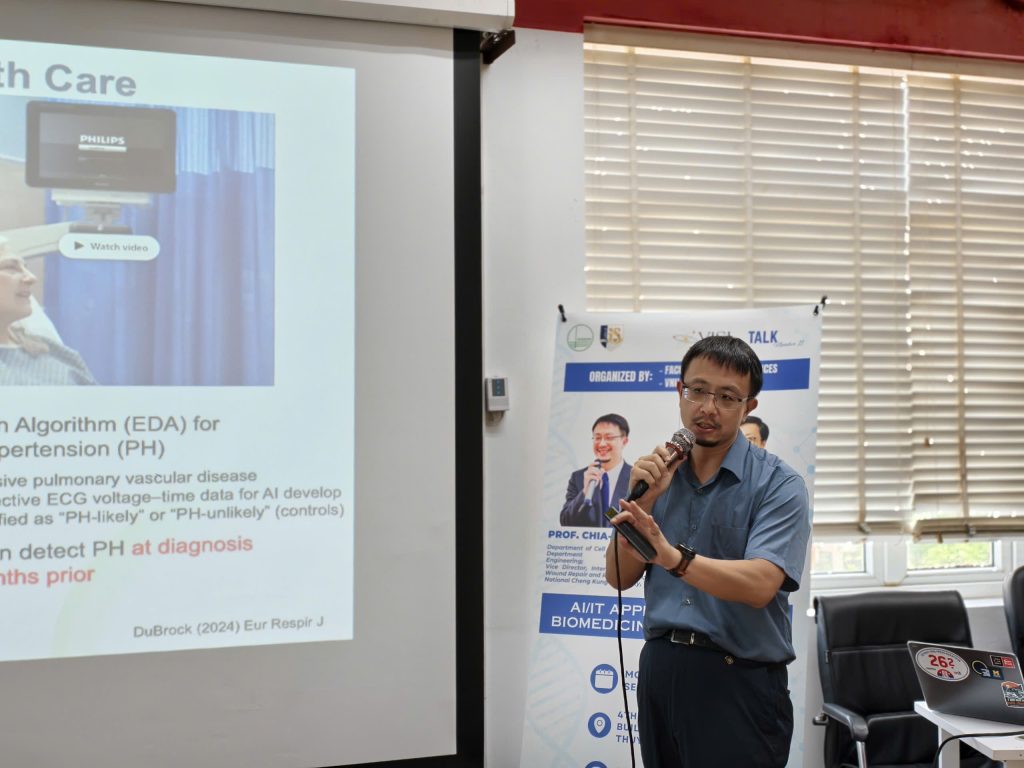
Prof. Chia-Ching Wu presents his research on using AI to predict stem cell reprogramming and stemness induction.
Opening the programme, Prof. Chia-Ching Wu presented his research, “AI Prediction of Stem Cell Reprogramming and Stemness Induction”. He explained that human adipose-derived stem cells (ASCs) can differentiate into many different cell types, which gives them great potential for tissue repair and regeneration. His team cultured these cells into three-dimensional spheroids, which more closely mimic the natural state of cells in the body.
The findings showed that three enzymes, KMT2A, SUV39H1 and EZH2, act as “switches” that turn genes on or off. These enzymes determine the cells’ morphology and the direction in which they differentiate. EZH2 is especially important because it creates differences between cells within the same spheroid. The team performed single-cell RNA sequencing (scRNA-seq) and then used machine learning algorithms to identify key genes. Six genes stood out: Nestin, RARRES1, SOX4, CTSK, GREM1 and LUM. All six were validated through computer simulation.
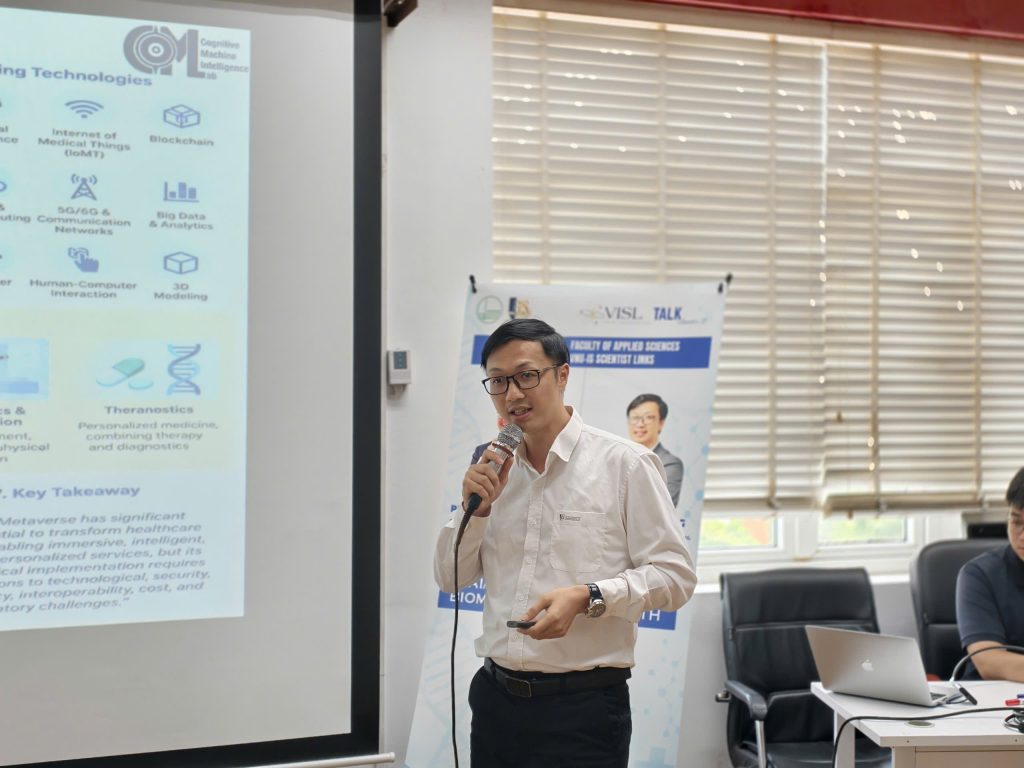
Dr. Ha Manh Hung shares his research on computer vision for healthcare.
Next, Dr. Ha Manh Hung presented “Computer Vision for Healthcare”. His talk gave an overview of how AI and deep learning are used to analyse medical images to support diagnosis and healthcare. Dr. Hung traced the development of medical imaging from X-ray, CT, MRI and ultrasound to PET/SPECT and hybrid imaging systems. Building on these technologies, models such as CNNs, U-Net, Transformers and foundation models are increasingly used for image classification, detection and segmentation, helping clinicians identify lesions and assess images. However, the field still faces many challenges, including a shortage of labelled data, imbalanced datasets, differences between datasets, and the need for reproducible results.
He then introduced the research directions of the CoMI group, which focuses on problems with strong practical applications: medical image segmentation, rehabilitation assessment, support for people with dyslexia, and eye-movement analysis for autism spectrum disorder screening. The group has developed a number of AI models and trialled applications to bring its research into practice.
Computer vision in healthcare is not only about improving model accuracy. The goal is also to create solutions that are stable, easy to deploy and explainable, and that genuinely support doctors, healthcare professionals and patients.
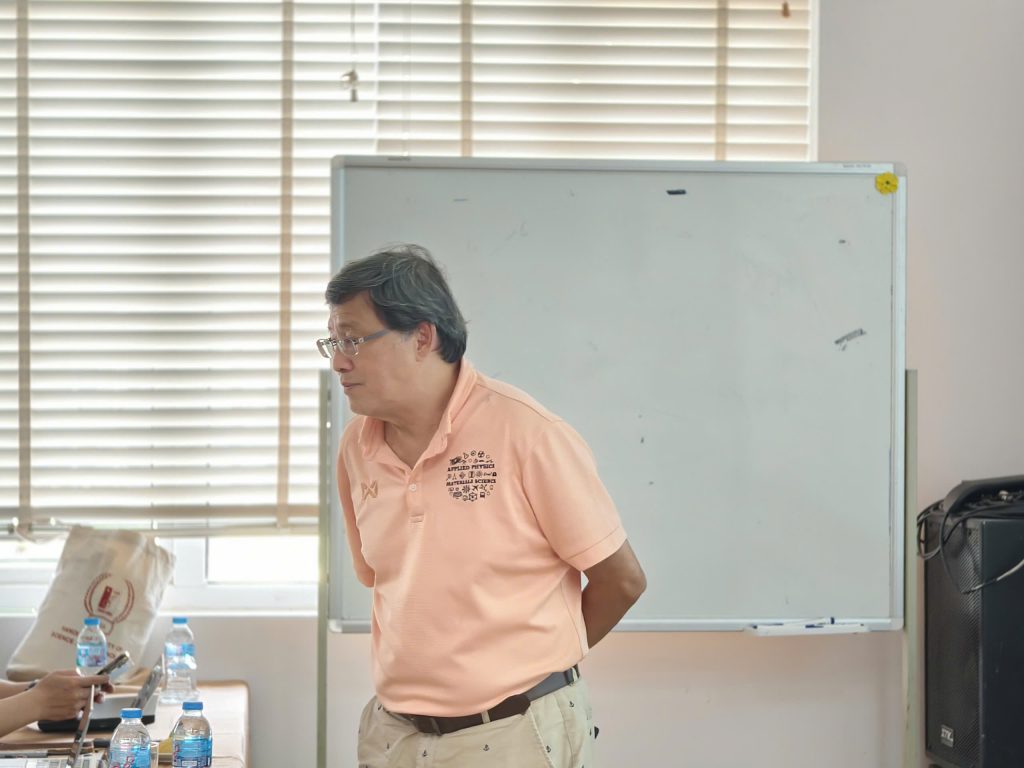
Prof. Chia Chu Chen gives a short talk on a research topic he is passionate about.
On the sidelines of the seminar, experts from both institutions discussed the research results of VNU-IS students during their internships at NCKU under the Taiwan Experience Education Program (TEEP). The two sides also explored interdisciplinary research collaboration on applying AI in biomedicine, as well as scholarship opportunities at NCKU for VNU-IS master’s students and PhD candidates.
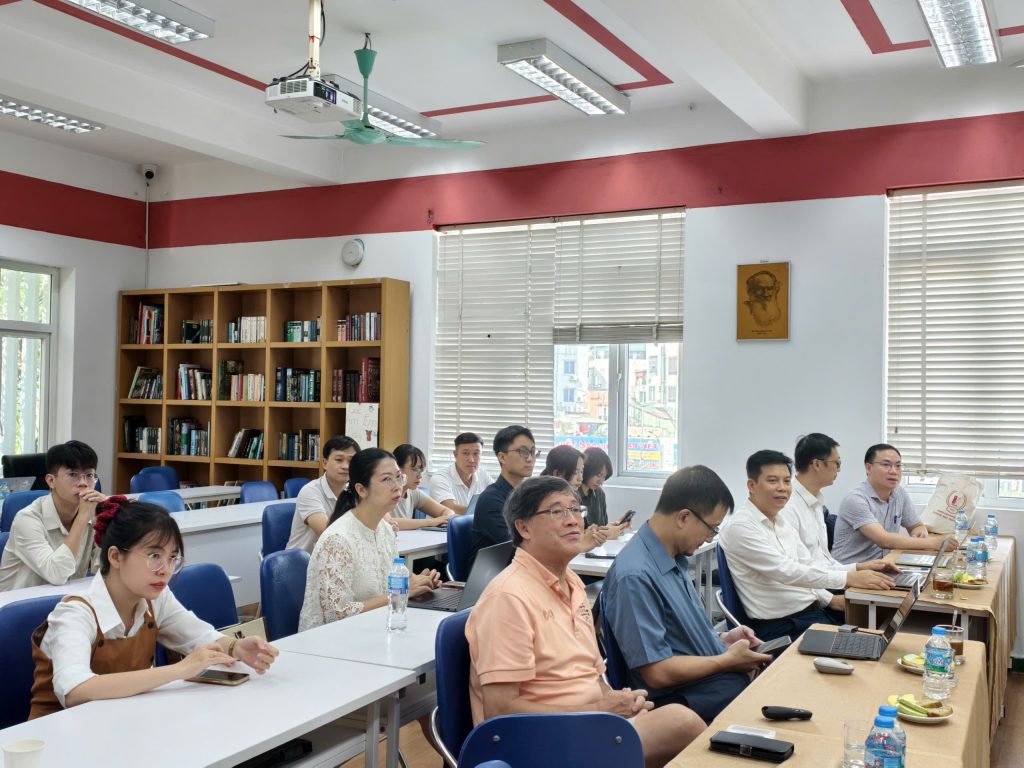
The seminar is a practical outcome of the partnership between VNU-IS and NCKU. It helps promote interdisciplinary research and creates more international study and research opportunities for the School’s lecturers, students and learners.