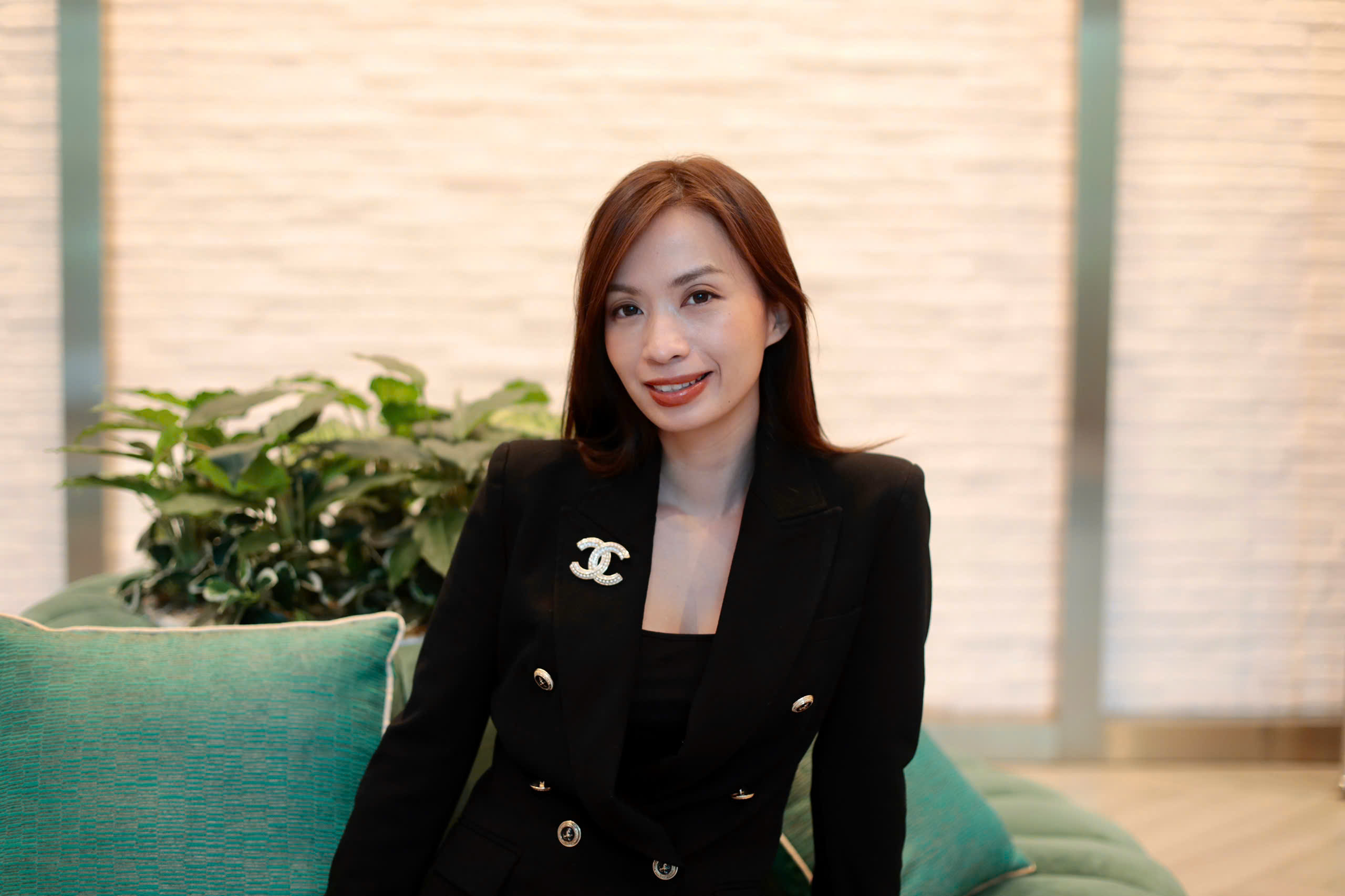
More than a decade ago, Nguyễn Hồng Ngọc (Ruby Nguyen), an alumna of VISK2010A, was one of the first students to join the joint program between the International School, Vietnam National University, Hanoi (VNU-IS), and Keuka College in the United States.
Today, she has returned to the program in a very different role – as Partnership Director at Keuka College, overseeing the development of Keuka’s partnerships and programs in Vietnam. Her journey from a shy student uncertain about her future to an international education professional is a story of opportunity, courage, and learning to trust one’s own pace.
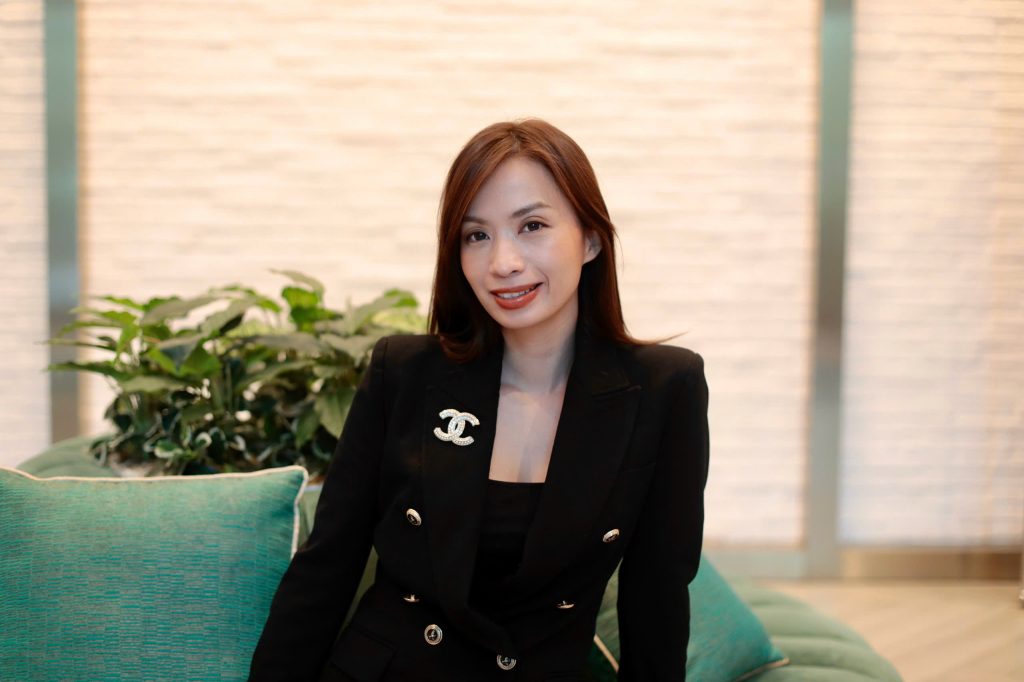
Nguyễn Hồng Ngọc (Ruby Nguyen) – Partnership Director at Keuka College.
It Started with an Opportunity
When Nguyễn Hồng Ngọc (Ruby) chose the VNU-IS–Keuka joint program in 2010, she did not have a carefully mapped-out career plan.
At the time, the decision was driven more by curiosity and a desire to explore than by a clearly defined professional ambition.
After studying in Hanoi, Ruby transferred to Keuka’s main campus in Keuka Park, New York, where she graduated with a B.S. in Management in 2012. More than a decade later, she would return to the same educational journey from a completely different position – not as a student receiving an opportunity, but as someone helping create opportunities for others.
Looking back, she says the most influential part of her experience at VNU-IS was not a particular course, but the learning environment created by her professors.
“The strongest influence on me during my time at VNU-IS was not any particular course,” she said, “but the way the faculty made students feel that their voices were heard and respected.”
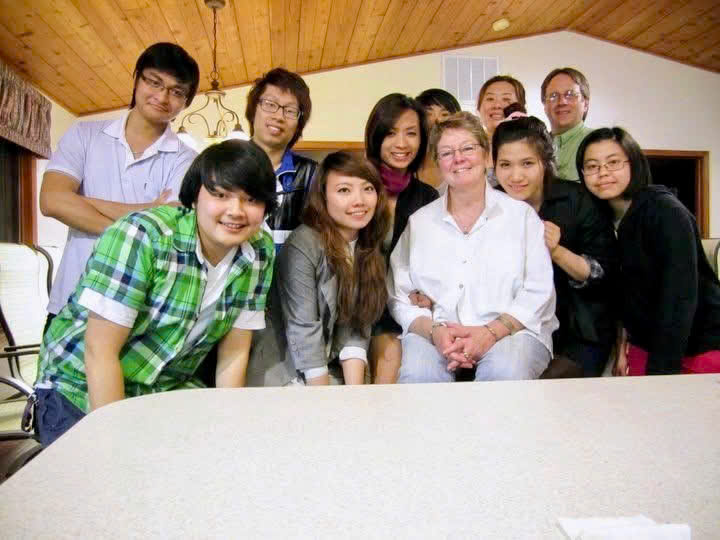
Vietnamese faculty members such as Ms. Mai Hữu and Ms. Việt Hằng provided warmth and support, while Keuka College faculty members, including Dr. Jose Torres and especially Ms. Lynn Lannon, introduced her to a more participatory approach to learning – one built around discussion, critical thinking, and developing an independent point of view.
“Before that, I was more accustomed to learning by receiving knowledge,” Ruby said. “My experience at VNU-IS and Keuka taught me that learning is also about asking questions, challenging ideas, experimenting, and taking greater responsibility for your own development.”
That lesson has remained with her throughout her career. Today, when working with students, she tries to create the same environment she once experienced – one where students feel heard, are encouraged to think independently, and have the space to discover their own direction.
Stepping into a New World
Ruby transferred to Keuka Park in the Fall of 2010. Before leaving Vietnam, she had imagined the United States as a fast-paced and bustling place, much like the big cities she had seen in movies. Keuka Park offered something entirely different. The rural campus was peaceful and close-knit, set beside Keuka Lake. Although the first days were overwhelming, the relatively small community helped her adapt and gradually feel at home.
“I had many opportunities to talk with faculty, get to know other students, and feel that I was truly part of the community rather than simply an international student studying far from home,” she said. “Looking back, that sense of closeness was one of the things that made my experience at Keuka so special.”
Yet, adapting to life in the United States was not easy.
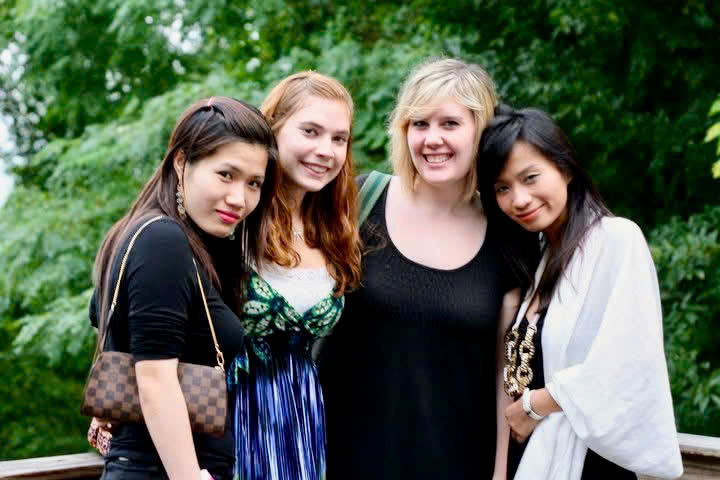
The biggest challenge was not one particular obstacle, but a combination of language barriers, homesickness, cultural differences, and the need to become more self-aware and independent.
“For me, the biggest challenge wasn’t a single factor, but an overwhelming mix of real-world language, a lesson in self-awareness, and homesickness,” Ruby recalled.
Academic English was one thing; keeping up with native-speaking classmates in everyday conversations was another. It took her about a month to adjust to the pace of spoken English. At the same time, it was her first experience living far away from her family.
Then came another important lesson: the courage to change direction.
Ruby initially enrolled in Accounting but soon realized that it was neither her strength nor her passion: “I had to learn to listen to myself, bravely admit it wasn’t the right fit, and proactively switch to International Business.”
Support from her academic advisors and her American roommate, Molly, helped her navigate that difficult period. Managing her own time, finances, and daily challenges gradually strengthened her independence.
The experience taught her that asking for help and building meaningful connections are not signs of weakness. They are part of growing up.
From a Shy Student to a Campus Mentor
When she first arrived at Keuka College, Ruby said, she was shy and reserved. But the close relationship between students and faculty gradually encouraged her to step out of her comfort zone.
With a student-to-faculty ratio of around 10:1, students could not easily disappear into the background. Professors knew their students by name and actively encouraged them to speak.
“The professors knew everyone by name, constantly called on me to speak, and encouraged me to trust my own voice,” she said.
The turning point came when Ruby founded a campus club focused on building students’ confidence and leadership skills. She also became an official mentor for newly arrived first-year students.
“When I could lead and help others find their footing, I realized I was no longer an ‘international student’ trying to adapt, but truly a core part of the Keuka community,” Ruby said.
It was a small but significant transformation: the student who once needed help adapting to a new environment had become someone who could help others find their footing.
Discovering a Passion for People
Another important chapter in Ruby’s journey was her participation in Keuka’s Field Period experiential internship program.
At the time, she was passionate about fashion and used her Field Period experiences to explore the industry. She worked in merchandising and spent a summer as an Executive Assistant to a leader at a fashion brand in New York City.
The experience gave her an inside look at management, decision-making, and the fast-paced operations of a global fashion business.
But more importantly, it helped her understand herself.
“That internship led me to a turning point,” she said. “What I was truly passionate about wasn’t developing products, but developing people.”
That realization eventually led her toward education.
Field Period taught her to adapt to unfamiliar environments, solve real-world problems, and learn through experience. Those lessons became a thread connecting her early professional experiences to her later career in international education.
Building a Career in International Education
After graduation, Ruby began her career as an Event Coordinator at the Olympia School. It proved to be a fitting starting point, requiring initiative, coordination across different stakeholders, and the ability to solve problems in real time.
She then built most of her career in international education in Vietnam, working across institutions including RMIT University Vietnam, Fulbright University Vietnam, and the International School Ho Chi Minh City (ISHCMC). Over time, her responsibilities expanded from events and operations to student experience, team management, program development, stakeholder engagement, and partnership building.
For Ruby, however, the most important turning points were not necessarily promotions or changes in job titles.
“They were the moments when I began moving from simply doing my own job well to understanding the bigger picture: what students needed, what the organization was trying to achieve, and how I could bring different people together to create a better outcome.”
Education was not the career path she had planned from the beginning. It emerged gradually through experience.
“The more I worked, the more I noticed that the roles I found most meaningful and energizing were usually connected to helping other people grow,” she said.
Eventually, she realized that the pattern was no coincidence.
“I would say the direction developed gradually through experience,” she said, “but eventually became a very deliberate choice: to continue building my career in education and in work that can make a meaningful difference in how other people learn, grow, and develop.”
Coming Full Circle
Today, Ruby serves as Partnership Director at Keuka College, overseeing Keuka’s partnerships and programs in Vietnam, including VNU-IS and UEF.
Her responsibilities range from strategic partnership development and program operations to admissions, communications, student experience, and identifying new opportunities for collaboration. But for her, successful partnerships are about much more than agreements and recruitment figures.
“What I care about most is ensuring our partnerships extend far beyond paper agreements to deliver tangible impact,” Ruby said. “For me, success isn’t just measured by recruitment metrics or signed contracts, but by the meaningful opportunities students gain to learn, connect, and grow.”
Her connection to the role is deeply personal.
“This role is deeply personal because I was once a student within this very partnership model,” she said. “I know what it feels like to stand at the threshold of your future, and how the right opportunity at the right time can alter your trajectory.”
Having once walked the path created by VNU-IS and Keuka, she now has the opportunity to help strengthen and widen it for the next generation.
That sense of coming full circle was particularly powerful when she returned to VNU-IS.
“My initial emotion was a wave of nostalgia mixed with a surreal sense of familiarity as if I were looking back at a past version of myself,” she said.
Talking to current students brought back memories of her own days in VISK2010A – the questions, excitement, and uncertainty of standing at a crossroads without knowing where the road ahead would lead.
“What touched me most,” she said, “was realizing they were standing almost exactly where I once stood.”
More than simply revisiting the past, returning to VNU-IS gave Ruby a sense of continuity.
“Having once been the beneficiary of these opportunities, I now get to return and help shape new opportunities for the next generation,” she said.
Preparing Young People for a Changing World
For Ruby, the international education experience is valuable not simply because students earn an international degree, but because it prepares them to navigate uncertainty.
She believes employers today look beyond academic credentials, particularly as AI continues to reshape the workplace.
“As AI rapidly changes the way we work, the capabilities that increasingly make a difference are independent thinking, problem-solving, sound judgment, and the ability to learn quickly in unfamiliar situations,” Ruby said.
English remains important, but she sees it as a working tool rather than simply a qualification.
“What matters is whether graduates can use English as a working tool: to exchange ideas, articulate a point of view, collaborate with colleagues, navigate differences, and get things done in an international environment,” she said.
She also emphasizes adaptability across cultures – the ability to enter an unfamiliar environment, understand different perspectives, collaborate effectively, and still deliver results.
Ultimately, she says, employers are not looking for graduates who “know everything.” They are looking for people who know how to learn, think, collaborate, and act when there is no ready-made answer.
She encourages students to make fuller use of opportunities already available to them: internships, relationships with faculty and alumni, and the chance to make English a natural part of their working lives.
“Don’t just ‘walk through’ your university years for a diploma,” she said. “Embrace the people, the experiences, and the community around you.”
“Do Life at Your Own Pace”
For new graduates entering the first 100 days of their careers, Ruby offers three practical pieces of advice: gain real-world experience as early as possible, intentionally cultivate meaningful relationships, and focus deeply on one high-leverage skill.
But beneath those practical recommendations is a more personal message – one that reflects her own journey.
She encourages graduates not to measure their progress against someone else’s timeline.
“Some find their path early; others need more time to explore, stumble, and discover what truly matters to them,” she said. “A journey that is slower, less linear, or off the beaten track is no less valuable.”
Yet moving at one’s own pace does not mean standing still.
“You still need to actively learn, prepare yourself, and gather the courage to act when opportunity knocks,” she said.
For Ruby, graduation is not the end of learning. It is a transition from a structured educational journey, guided by curricula and professors, to a self-directed path where individuals must formulate their own questions, make their own choices, and take ownership of their future.
It is a philosophy that mirrors her own story.
Ruby began university without a clear career plan. She struggled with language and homesickness, changed her major, explored fashion, discovered a passion for developing people, and gradually found her way into international education.
Today, she has returned to the very program that once gave her the first opportunity to step beyond the familiar.
Writing the Next Chapter
For now, Ruby is not rushing to define distant milestones for the next stage of her career.
“Right now, I am not in a rush to set distant milestones for my ‘next chapter,’” she said. “That is very much in line with something I have always believed: do life at your own pace.”
Her immediate priority is to perform her current role well, understand the needs of students and partners more deeply, and work with Keuka to strengthen its programs in Vietnam – from learning experiences and real-world exposure to professional connections.
There is, however, one particularly meaningful part of this new chapter.
“I was once a student who benefited from the opportunities this program created,” she said. “Now, I hope to help create even better experiences and opportunities for the students who come after me.”
Perhaps that is the most beautiful part of Ruby’s journey: she is not returning simply to close a circle, but to open new ones.
The opportunity she once received has become an opportunity she can now help create for others.
And so, rather than trying to predict exactly where the next chapter will end, she chooses to focus on writing its opening pages:
“I simply want to write its first pages well: do the work in front of me well, create meaningful value for our students, and help the program continue to grow in a way that truly matters,” she said.
From a young VISK2010A student who simply wanted to “see how far I could go” to an education professional helping shape opportunities for the next generation, Nguyễn Hồng Ngọc (Ruby)’s story is a reminder that a career does not always begin with a perfect plan.
Sometimes, it begins with a chance worth taking.
And sometimes, the most meaningful destination is found only after we have learned to trust the pace of our own journey.