Vietnam is showing strong determination to shift to a growth model driven by science, technology and innovation, the development of strategic industries and a high-quality workforce.
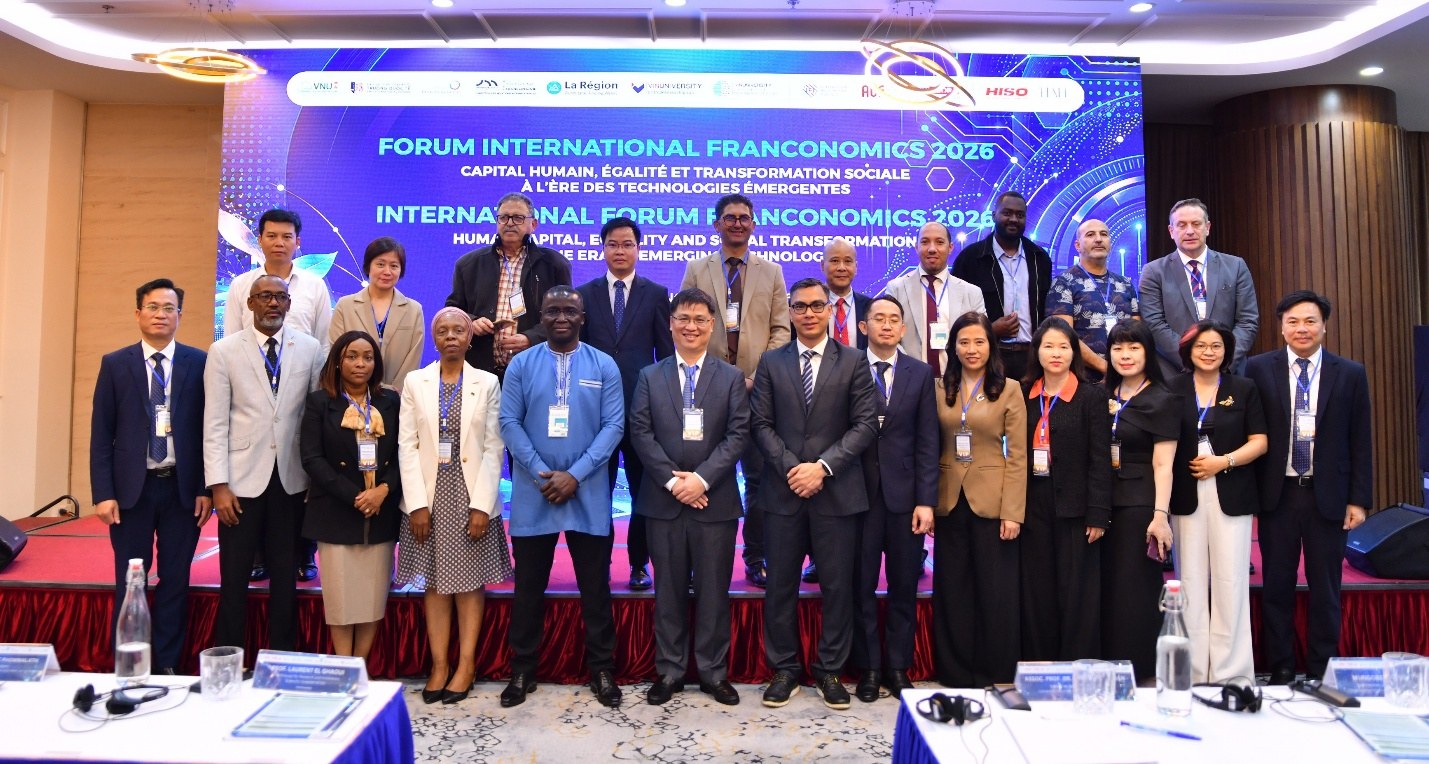
On 5 November, the Franconomics 2026 opened in Hanoi under the theme “Human Capital, Equality and Social Transformation in the New Technological Era”. Delegates, experts and researchers from 40 universities and research institutes attended, representing more than 10 countries and territories across five continents.
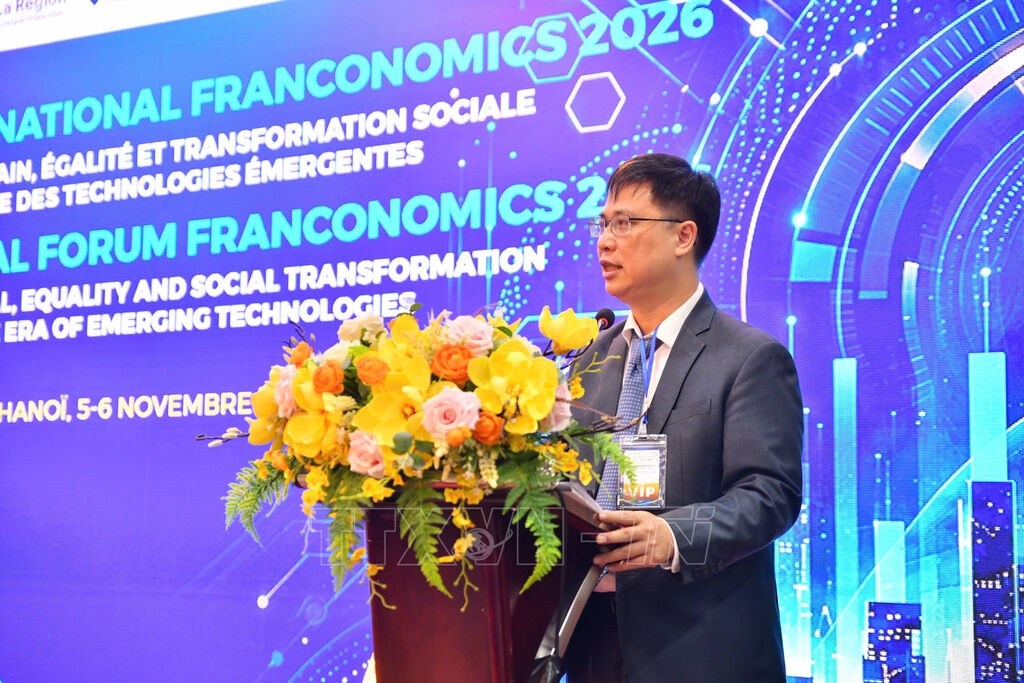
VNU-IS Rector Nguyen Anh Tuan delivers the opening remarks.
The forum was co-organised by VNU International School – Vietnam National University, Hanoi (VNU-IS), the Organisation internationale de la Francophonie (OIF), the Institut international de la Francophonie (2IF) of Jean Moulin Lyon 3 University (France), and VinUniversity. It was supported by the Agence universitaire de la Francophonie (AUF) and other international partners.
In his opening remarks, Rector Nguyen Anh Tuan said Franconomics is an academic initiative launched in 2019. Its aim is to create a space for multidisciplinary dialogue that brings together scientists, policymakers, businesses and international organisations to discuss socio-economic issues that matter to Vietnam and the Francophone community.
Over six editions, the forum has steadily expanded its network of experts and partners, encouraged academic exchange and created new opportunities for international cooperation. The International Francophone Institute merged into VNU-IS in February 2025, and continuing Franconomics after the merger supports the School’s internationalisation strategy. It also strengthens links between Vietnamese higher education and institutions, universities and businesses around the world.
According to Rector Nguyen Anh Tuan, this year’s theme is especially timely because artificial intelligence (AI) and other emerging technologies are profoundly reshaping the economy and society. One of VNU-IS’s priorities is the “triple helix” model of cooperation between the State, universities and businesses. This model links development policy with scientific research, workforce training, innovation and real-world needs. VNU-IS hopes Franconomics will go beyond sharing ideas and lead to joint research programmes, collaborative projects, technology transfer activities and initiatives with practical value.
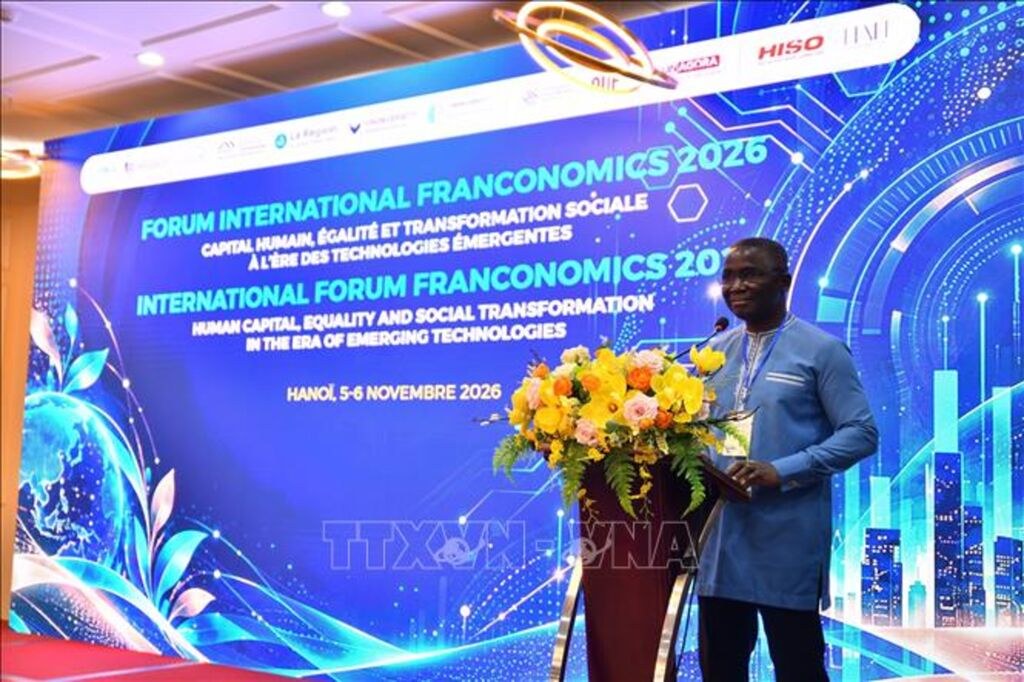
Mr Rigobert Pinga Pinga, Acting Head of the OIF Regional Representation for Asia and the Pacific, addresses the forum.
Mr Rigobert Pinga Pinga, Acting Head of the OIF Regional Representation for Asia and the Pacific, noted that the world faces political, economic and environmental upheaval while technology advances ever faster, particularly in AI, robotics, biotechnology and cybersecurity. Against these far-reaching changes, he said, the core requirement is to place people at the centre of technological progress. That means investing sustainably in human resource development, ensuring equal opportunities and pursuing social transformation that benefits all citizens.
The OIF representative praised Viet Nam’s development direction. He said the country is showing strong determination to shift to a growth model driven by science, technology and innovation, the development of strategic industries and a high-quality workforce. He expressed hope that the discussions at Franconomics 2026 would help find ways to make effective use of new technologies, so that technology does not become a source of new inequalities but instead drives human progress, social inclusion and inclusive development.
Speaking at the forum, Professor Manuel Jobert, Vice-President of Jean Moulin Lyon 3 University (France) and Director of 2IF, said the relationship between people and technology is a central issue in development. Humans have always adapted to technological change and innovation. However, the rapid rise of AI has also raised concerns about risks to humanity’s future. For this reason, he stressed, people must remain at the centre and stay the top priority, however far technology advances.
The representative of Jean Moulin Lyon 3 University said Franconomics is concrete evidence of higher education cooperation between France and Viet Nam, and that it helps promote the values of the Francophone community in science, education and culture. The next edition of the forum is expected to take place in Lyon, France, in 2027.
The forum’s discussions were organised into three thematic areas:
- gender equality in technology sectors;
- human resource development, skills transition and the labour market;
- social innovation, governance and sustainable development in the age of AI.
The organising committee received 106 research papers and selected 12 for presentation across three thematic sessions.
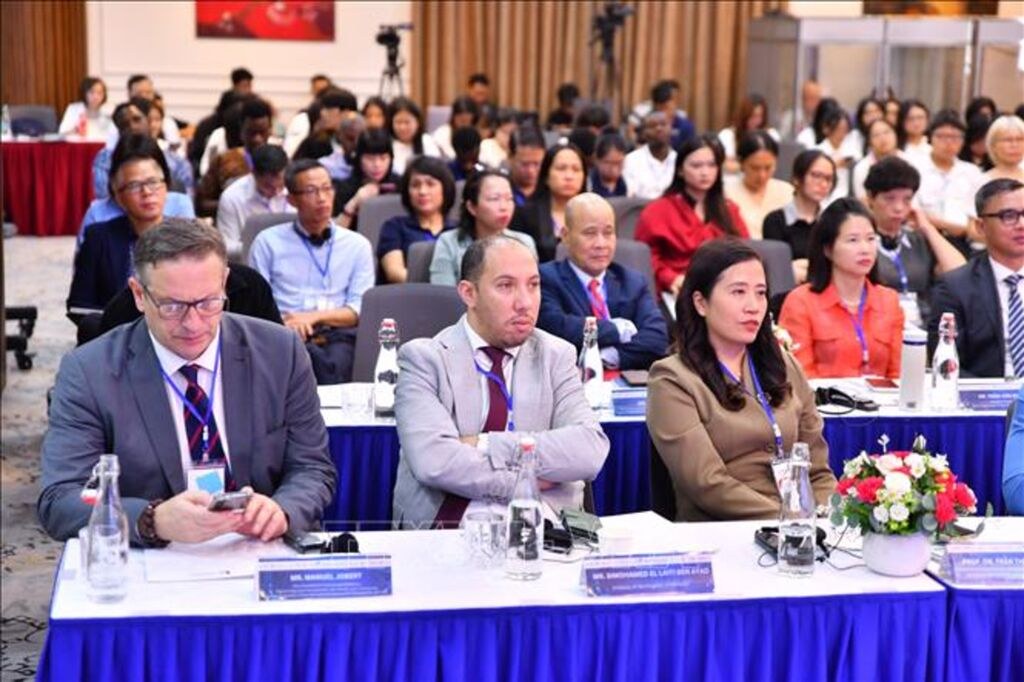
Vietnamese and international delegates attend the forum.
On 6 November, delegates will take part in a field visit to businesses in Bac Ninh city. The visit will let international experts and representatives of training institutions, regulatory agencies and businesses see how technology is applied in production, digital transformation and workforce development. Participants will also discuss ways to strengthen university–industry cooperation in training, research and technology transfer.
Through academic exchange, policy dialogue and links with industry, Franconomics 2026 aims to strengthen international cooperation and mobilise resources for research and innovation. Its goal is to help develop solutions for workforce development, equality and sustainable social transformation in the new technological era.