Moving thousands of kilometers from Russia to Hanoi to pursue a Management program, Antonio Panibratchenko has done far more than earn academic credits at the International School – Vietnam National University, Hanoi (VNU-IS).
From mastering Vietnamese and navigating Hanoi’s bustling streets to earning high praise during his internship at TPBank, Antonio’s story is a testament to what happens when curiosity meets courage. In this interview, he shares the challenges, surprises, and life-changing experiences that have shaped his journey as an international student in Vietnam.
– What made you decide to come to Vietnam for university instead of staying in Russia or choosing another country?
– For me, studying abroad was not only about getting a university degree. I wanted to experience a different culture, become more independent, meet people from different backgrounds, and discover new opportunities.
Vietnam offered me the opportunity to study Management in an international academic environment through a program connected with Keuka College in the United States. I was especially interested in studying business in a country where I could experience a different culture and see how businesses operate in real life.
I have always been interested in exploring the world, so moving to Vietnam was also a personal challenge. I wanted to step outside my comfort zone, improve my English, learn Vietnamese, and build a future connected with international business.
Looking back, I think coming to Vietnam has given me much more than just an education. It has helped me grow as a person and see the world from a different perspective.
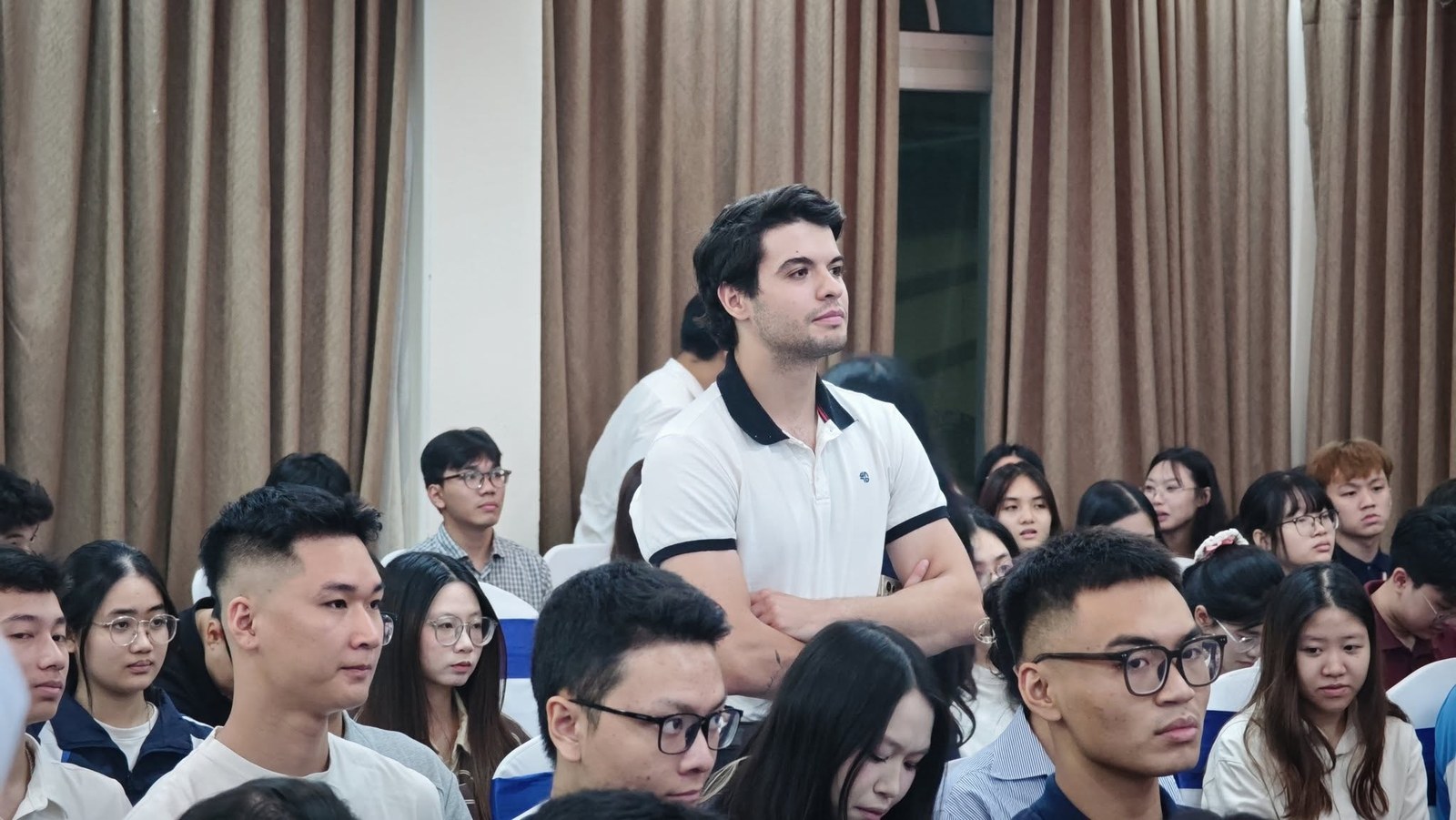
Antonio Panibratchenko participating in a student seminar alongside fellow VNU-IS students.
– When you first arrived in Vietnam, what surprised you the most — whether it was the culture, the people, or daily life? How long did it take you to adjust?
– One of the most interesting things about Vietnam is how different everyday life can be from what I was used to. Hanoi is a very active city, with busy streets, motorbikes everywhere, small local restaurants, and people spending a lot of time outside.
What I especially appreciate is the opportunity to communicate with local people and experience Vietnamese culture directly, rather than only learning about it from books or the internet.
Of course, adapting to a new country takes time. There are differences in language, communication, food, and everyday habits. But I have always enjoyed discovering unfamiliar things, so I see these differences as opportunities to learn. Learning Vietnamese has also helped me feel more comfortable here. Even though I am still improving, being able to communicate in Vietnamese makes everyday life much easier and helps me build closer connections with people. Today, Hanoi has become an important part of my life, and I feel much more confident living independently in Vietnam.
– How has studying in the Management program in Vietnam differed from what you had expected before coming here? Are there any skills or knowledge that you feel you could only have gained by being here?
– Before starting university, I thought studying Management would mainly involve learning business theories, economics, and how companies operate. However, I have realized that studying business is also about communication, teamwork, problem-solving, and understanding people.
My program is taught in English, so I am constantly developing my ability to study, communicate, and present ideas in an international environment.
Subjects such as Marketing and other business courses have helped me understand how companies make decisions and interact with customers. Group projects and presentations have also encouraged me to become more confident when expressing my ideas.
One of the biggest advantages of studying in Vietnam is that I can connect what I learn in class with real experiences outside university. Through my experience at TPBank, I have had the opportunity to observe business processes and learn about international payments, banking documents, and communication in a Vietnamese company.
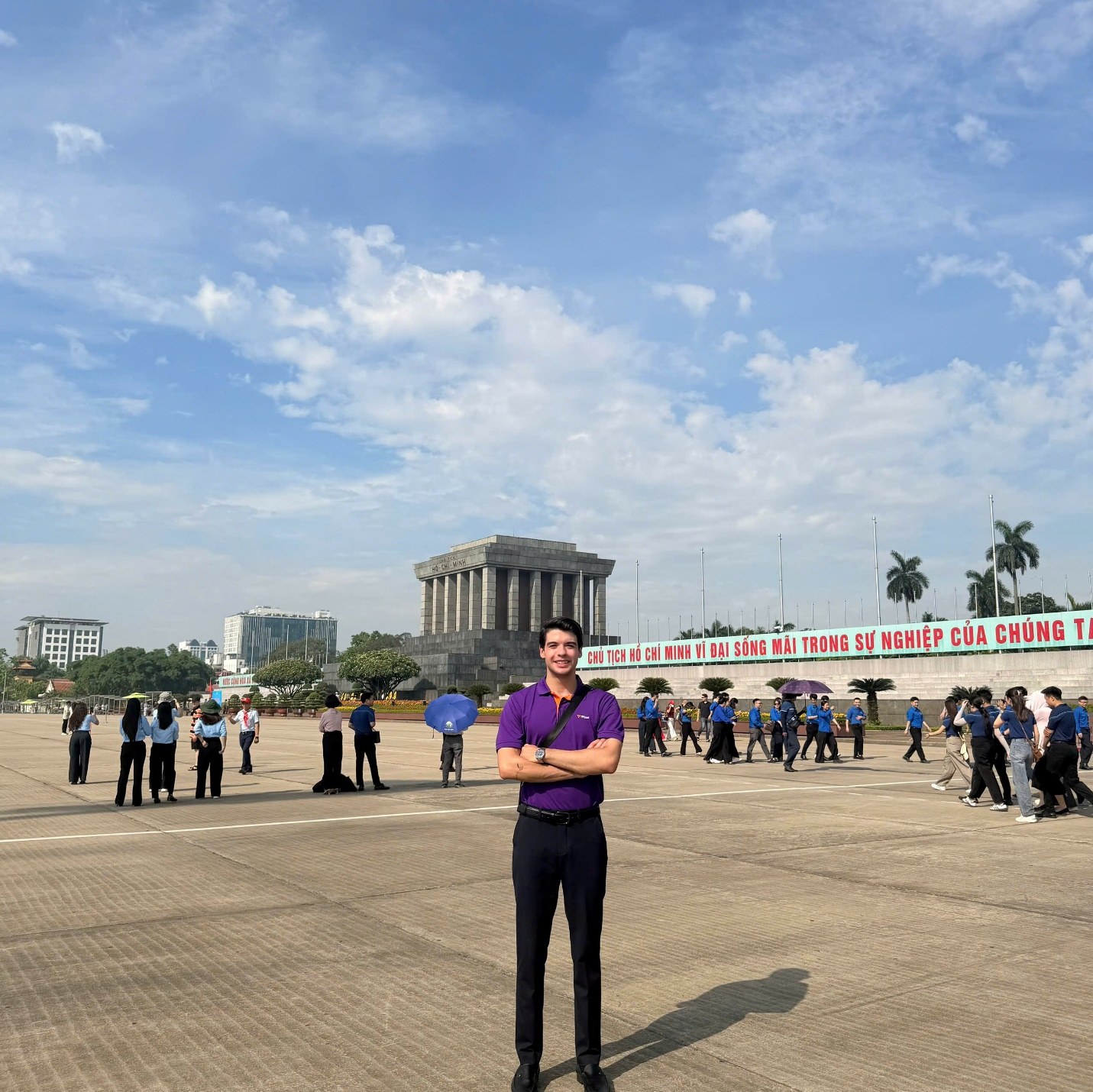
Antonio Panibratchenko at Ba Dinh Square in Hanoi during his time studying and interning in Vietnam.
I believe this combination of academic knowledge, cultural experience, and practical exposure is especially valuable for someone who wants to build a career in international business.
– How did you get started with your internship at TP Bank? While working in a Vietnamese corporate environment, did you face any challenges related to language, work style, or office culture, and how did you overcome them?
– My experience at TPBank has been an important opportunity to learn about the Vietnamese business environment beyond the classroom.
At the beginning, one of my biggest challenges was understanding professional Vietnamese, especially banking terminology and documents. Everyday Vietnamese conversations are very different from discussing international payments, financial procedures, or business documentation.
I had to become familiar with new terminology and learn how different banking processes work. Whenever I did not understand something, I tried to ask questions, observe my colleagues, and study the documents more carefully.
During my time at TPBank, I have learned about international transactions, letters of credit, and other banking procedures. I have also participated in communication and marketing activities, which gave me opportunities to interact with different people.
Another important lesson has been understanding Vietnamese workplace culture. Working in a local company requires flexibility, respect, patience, and the willingness to adapt.
I still have a lot to learn, but I believe that making mistakes, asking questions, and staying curious are natural parts of gaining professional experience.
– We’ve heard that the HR team at TP Bank speaks very highly of you — both in terms of your work performance and your ability to integrate into the corporate environment. In your view, what has helped you, as an international student, make such a strong impression in a Vietnamese workplace?
– First of all, I am very happy and grateful to hear that. I really appreciate the opportunities and support I have received from the people at TPBank.
I think one of the most important things is being open to people and willing to learn. I do not believe that being an international student should stop me from communicating with Vietnamese colleagues or participating in the same activities as everyone else.
I try to be friendly, respectful, curious, and adaptable. When I do not understand something, I ask questions instead of pretending that I already know everything.
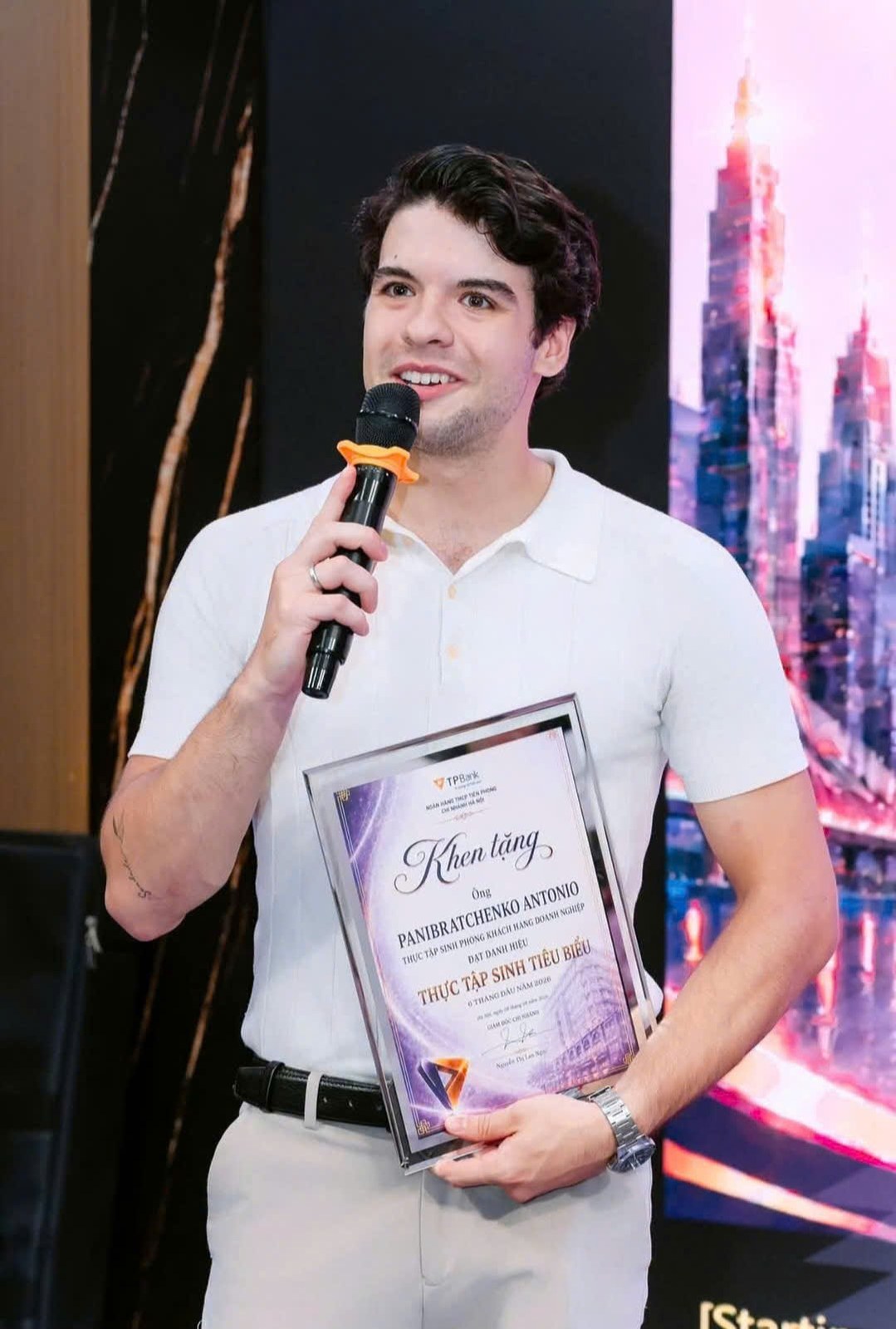
Antonio Panibratchenko honored with the “Outstanding Intern” award for the first half of 2026 at TPBank’s Corporate Banking Department.
I also think that being interested in Vietnamese language and culture makes a difference. I want to understand the people I work with, not just complete my tasks.
For me, professional development is not only about technical knowledge. It is also about building relationships, understanding different perspectives, and learning how to work with people from different backgrounds.
I am still at the beginning of my career, so I see every opportunity as a chance to gain experience and become better.
– After your time studying and interning here, do you have any advice for other international young people who are considering coming to Vietnam to study and work?
My main advice would be to stay curious, be open-minded, and not be afraid of unfamiliar experiences.
Moving to another country is not always easy. You may face language barriers, cultural differences, and situations where you feel uncomfortable or unsure of yourself. But I believe those experiences are often the ones that help you grow the most.
I would also strongly recommend learning at least some Vietnamese. Even basic communication can make a big difference in daily life, friendships, and professional opportunities.
Another important thing is not to limit your experience to university classrooms. Explore the country, meet local people, participate in activities, and look for opportunities to gain practical experience.
Personally, I enjoy exploring nature, travelling, and discovering new places, and Vietnam has given me many opportunities to do that alongside my studies.
Finally, I would say that you do not need to have your entire future planned before moving abroad. Sometimes the most valuable opportunities appear when you are willing to try something new.
For me, studying and living in Vietnam is not just one stage of my education. It is an important part of discovering who I am and what kind of future I want to build.