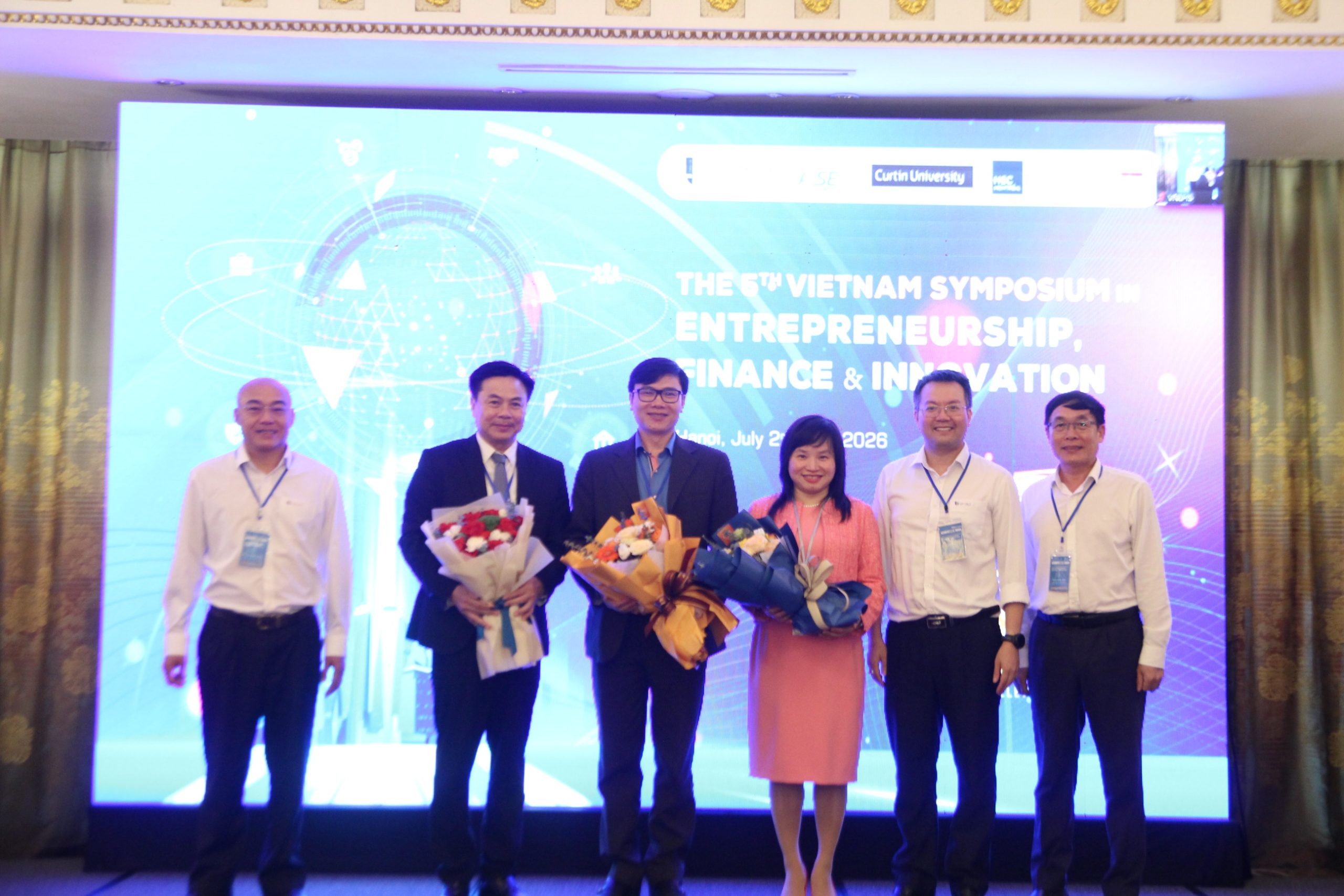
The scientific knowledge generated by VSEFI has helped lay the groundwork for numerous strategies and policies promoting innovation in Vietnam, organisers say.
The Vietnam Symposium in Entrepreneurship, Finance, and Innovation (VSEFI), an annual international conference hosted by International School (VNU-IS) under Vietnam National University, Hanoi (VNU), has marked its fifth anniversary — evolving from a modest academic gathering into an internationally recognised forum that bridges scholarly research with policy recommendations and socioeconomic development.
Building on the success of previous editions, VSEFI 2026 was held on 1–2 July, drawing experts and researchers from 40 universities and research institutions worldwide.
Fostering a culture of international research and publication
Reflecting on the five-year journey, Assoc.Prof.Dr Nguyen Van Dinh, Vice Rector of VNU-IS, said the partnership with AVSE Global — a worldwide network of Vietnamese scientists and experts — predated the COVID-19 pandemic. After the health crisis, the two organisations agreed to make entrepreneurship, finance, and innovation the symposium’s permanent thematic pillars.
“Perhaps the greatest achievement for us has been confidence,” Dr Dinh said. “We have gone from being primarily a knowledge-receiving institution to co-creating and co-chairing a reputable international academic forum — in line with our strategy to become a hub for knowledge transfer, innovation, and scholarly collaboration.”
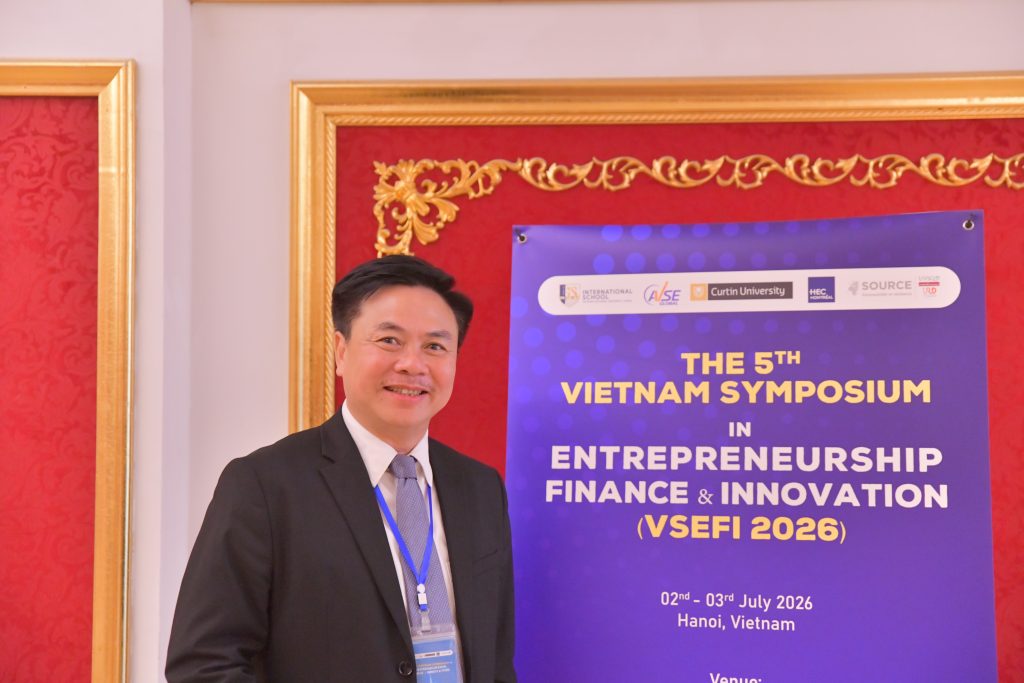
Assoc.Prof.Dr Nguyen Van Dinh – Vice Rector of VNU-IS
Over five editions, he noted, VSEFI has helped VNU-IS build a robust culture of research and international publication among its faculty. The school now consistently ranks among VNU’s top three units for international research output.
Beyond publications, the symposium’s value lies in its capacity to translate research findings into policy proposals and practical recommendations. Results presented at VSEFI have provided an evidence base and critical perspectives for businesses and policymakers alike, turning academia into a bridge for sustainable economic development.
VNU-IS has also leveraged its partnership network to attract and nurture young researchers, offering them access to global research communities. Looking ahead, the school plans to expand the symposium’s scale, strengthen its researcher networks, and establish high-calibre research groups capable of producing work with direct real-world applications.
Building foundations for Vietnam’s innovation policies
Prof.Dr Nguyen Duc Khuong, Chairman of AVSE Global and a co-founder of VSEFI, recalled that the forum grew out of discussions about Vietnam’s shift towards a knowledge- and innovation-driven growth model. When the government set out its “Startup Nation” vision in 2016, both partners asked what foundations the country needed to realise that ambition.
“We deliberately put ‘Vietnam’ in the symposium’s name,” Professor Khuong said. “Our long-term vision is for the country to become a centre of excellence — a credible academic destination where leading scientists and experts converge around science, technology, and innovation.”
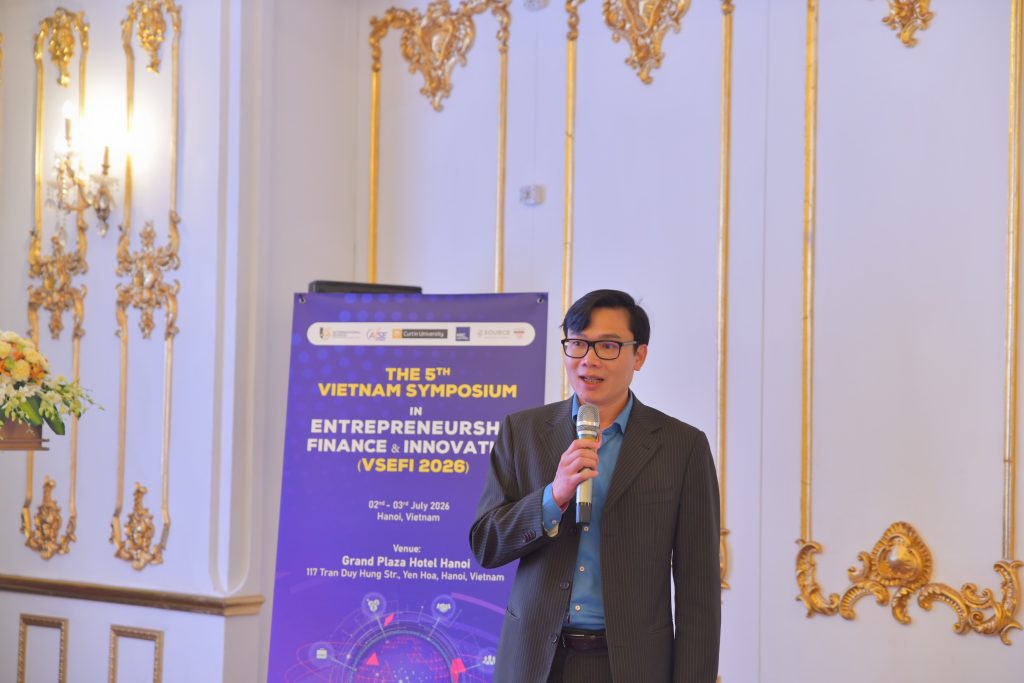
Prof.Dr Nguyen Duc Khuong – Chairman of AVSE Global.
After five editions, approximately 90–95 per cent of papers presented each year come from international universities, research institutes, and experts, underscoring the forum’s global reach. World-class institutions such as Université Paris-Saclay (France) and Curtin University (Australia) have become regular partners.
The symposium’s impact extends well beyond the conference hall. Vietnamese academics who participate routinely go on to establish collaborations with international peers, launching joint research projects and co-authored publications.
“We believe the scientific knowledge generated here is helping to build a foundation for entrepreneurship curricula, equip businesses with better management and financial strategies, and provide an evidence base for policies that support the startup ecosystem,” Professor Khuong said.
On the practical front, he noted that most startups face severe difficulties in their early years, with many exiting the market within five. VSEFI aims to arm entrepreneurs not only with creative ideas but also with the management, financial, and strategic know-how needed for sustainable growth.
Looking forward, the organisers plan to produce an annual policy report on entrepreneurship and innovation to advise the government and provincial authorities. Professor Khuong also expressed hope that VSEFI would continue strengthening ties between academia, business, and policymakers to maximise the applied value of research.
“Our goal is to reach the world stage, and that means doing science to international standards,” he said. “The early years may be challenging, but once we have the opportunity to work alongside global partners, we will build the confidence and capacity to compete. Vietnam’s young workforce, its appetite for technology, and its readiness to innovate are advantages that even ageing economies look to learn from.”
Ultimately, he stressed, VSEFI’s deepest aspiration is not merely to sustain an academic forum but to help foster innovative enterprises capable of creating lasting value for society and driving the long-term growth of the Vietnamese economy.