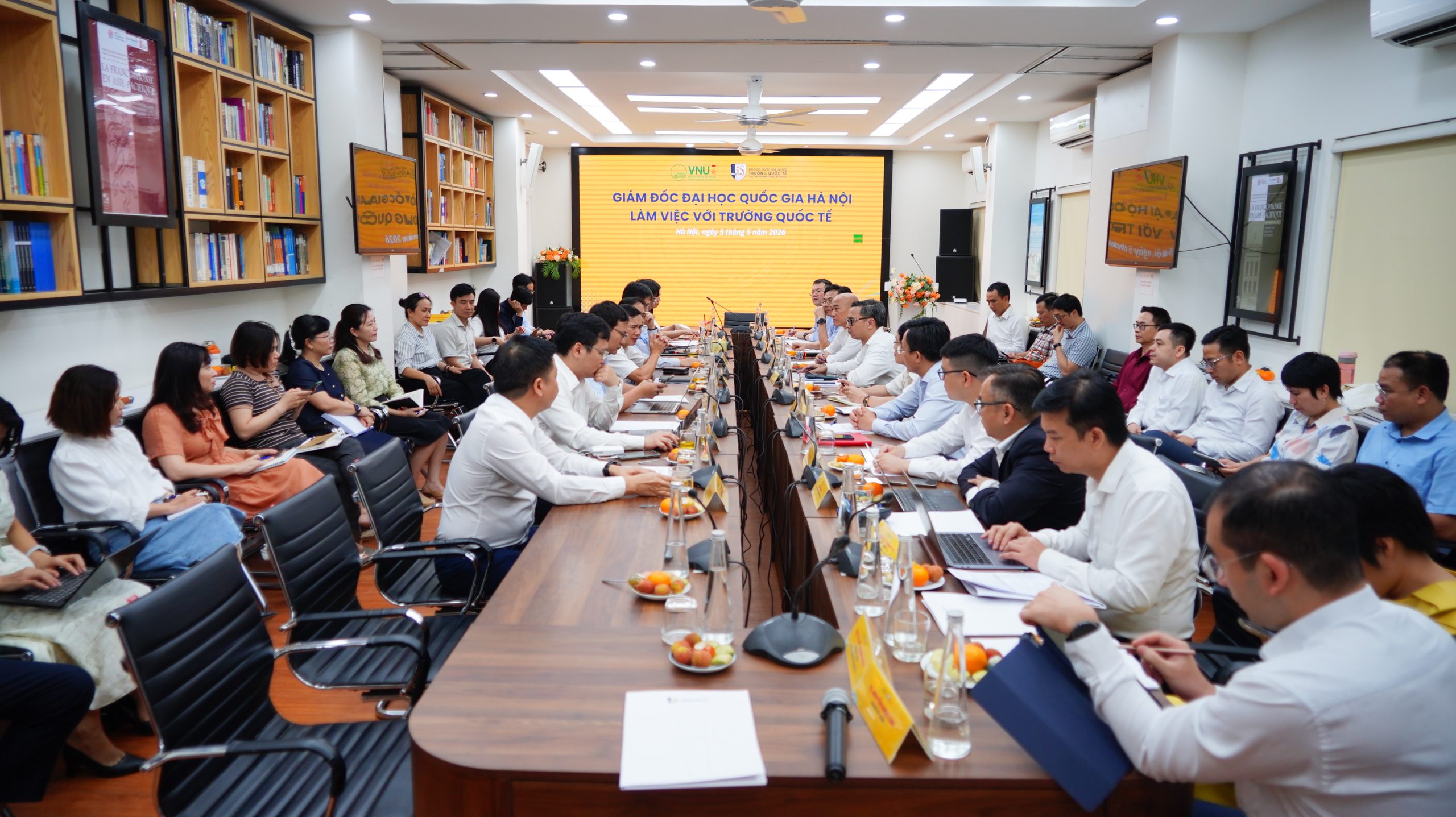
On May 5, VNU President, held a working session with VNU – International School (VNU-IS). The meeting was attended by Assoc. Prof. Dao Thanh Truong, Vice President of VNU, representatives of VNU functional departments, the Party Committee, the Board of Management of VNU-IS, leaders of affiliated units, and experts.
At the meeting, Assoc.Prof.Dr. Pham Xuan Hoan, Deputy Secretary of the Party Committee, together with the School’s Board of Management, reported to the VNU President on the School’s operational model, academic affairs, human resources, and development orientations for the coming period.
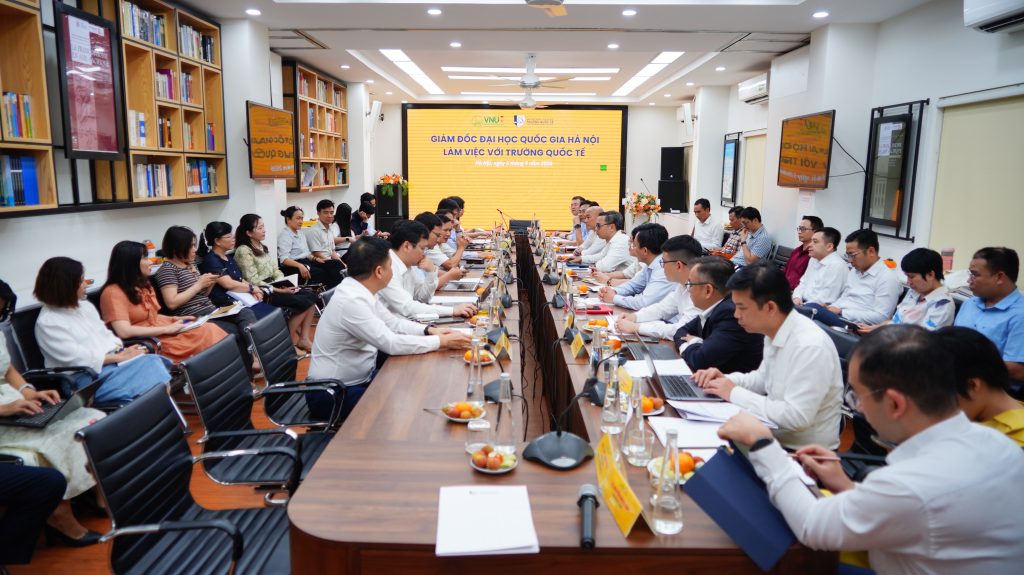
Originally established in 2002 as the Vietnam–Russia International School, VNU – International School has undergone more than 20 years of development. The School currently offers 17 undergraduate programs, 11 master’s programs, and 2 doctoral programs through various training models, including joint programs, dual-degree programs, and double-degree programs. VNU-IS is also the unit responsible for implementing all foreign-language training programs within VNU. International lecturers account for between 30% and 70% of teaching staff in each program. At present, the School has approximately 7,500 students and learners, contributing significantly to the provision of high-quality human resources that meet the increasingly demanding requirements of the labor market.
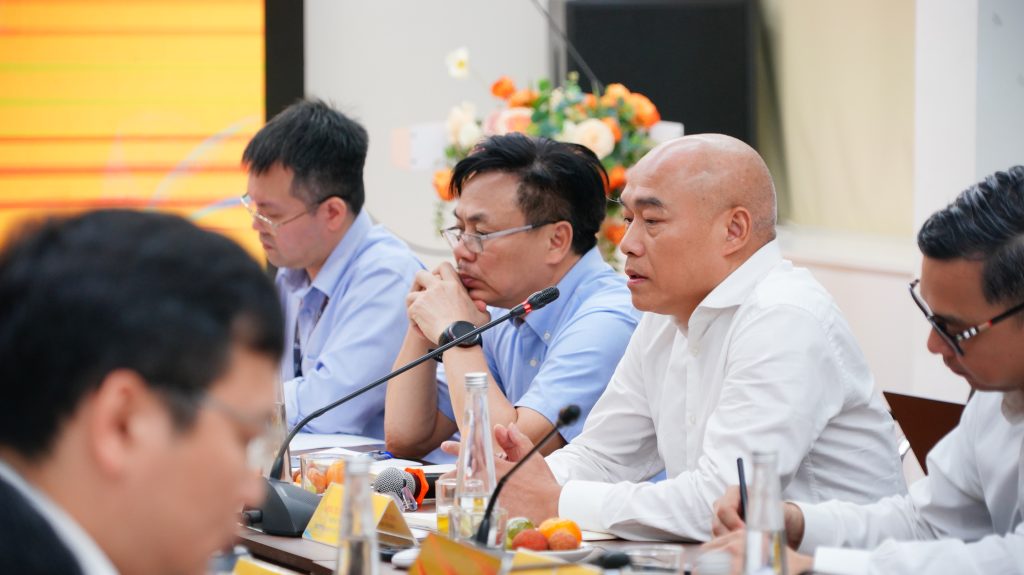
The School also seeks to achieve financial autonomy, strengthen international student exchange and credit recognition, develop key engineering and technology disciplines aligned with the Fourth Industrial Revolution, accelerate digital transformation, comprehensively apply information technology in governance, teaching and learning, and foster a distinctive student identity and institutional culture.
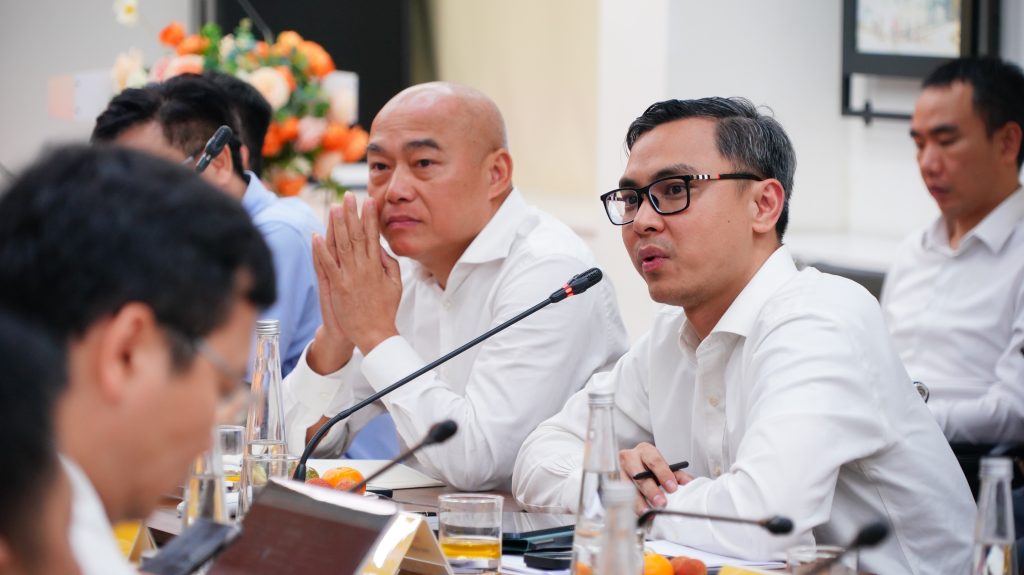
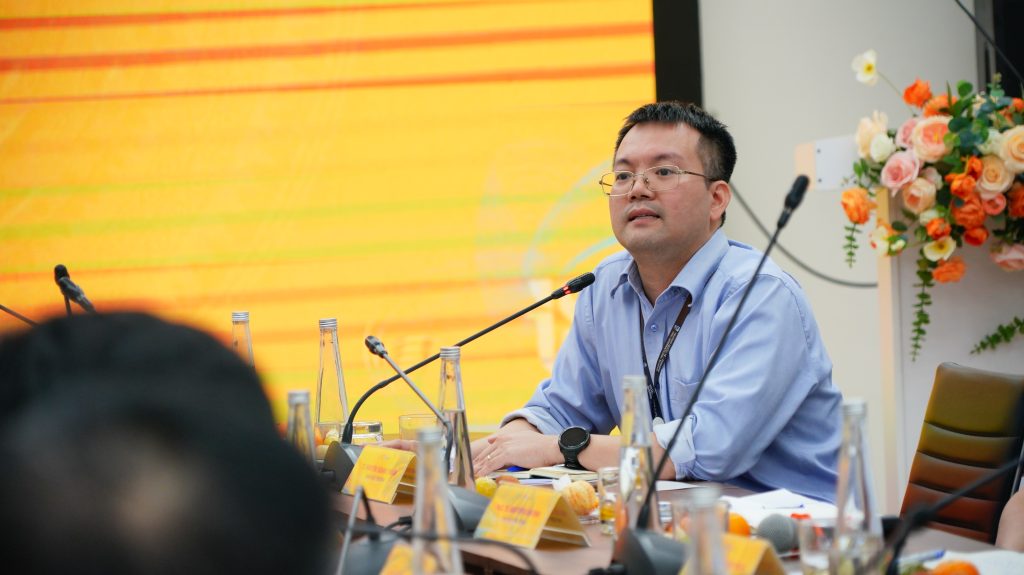
Following the report, VNU President provided practical and specific directions concerning personnel, academic development, and the School’s operational model. Regarding human resources, the VNU President requested the School to conduct a comprehensive review and formulate a personnel plan within May. In terms of academic affairs, he emphasized the need to further develop high-quality training programs aligned with VNU’s overall development strategy. He also highlighted the importance of promoting cooperation with universities ranked among the world’s top 200 institutions and implementing advanced educational models such as dual-degree, double-degree, and 1+1 or 3+1 programs.
Concerning the School’s operational model and long-term development orientation, VNU President Bui The Duy affirmed that VNU-IS should continue to maximize the effectiveness of its English-medium programs, considering them a key foundation for developing the School into a leading higher education institution in international cooperation for both VNU and Vietnam, supported by breakthrough mechanisms in tuition policies, faculty development, and learning environment enhancement.
Under this orientation, VNU International School is expected to become a “hub” attracting international lecturers and students, thereby contributing to enhancing the position and reputation of VNU on the global stage.
The working session reached consensus on several important issues and provided clear directions for the future development of VNU International School. The guidance from the VNU President is expected not only to help the School further improve its organizational model and educational quality, but also to create new opportunities for deeper international integration, gradually realizing the goal of building VNU-IS into a modern, dynamic, and highly competitive international university.