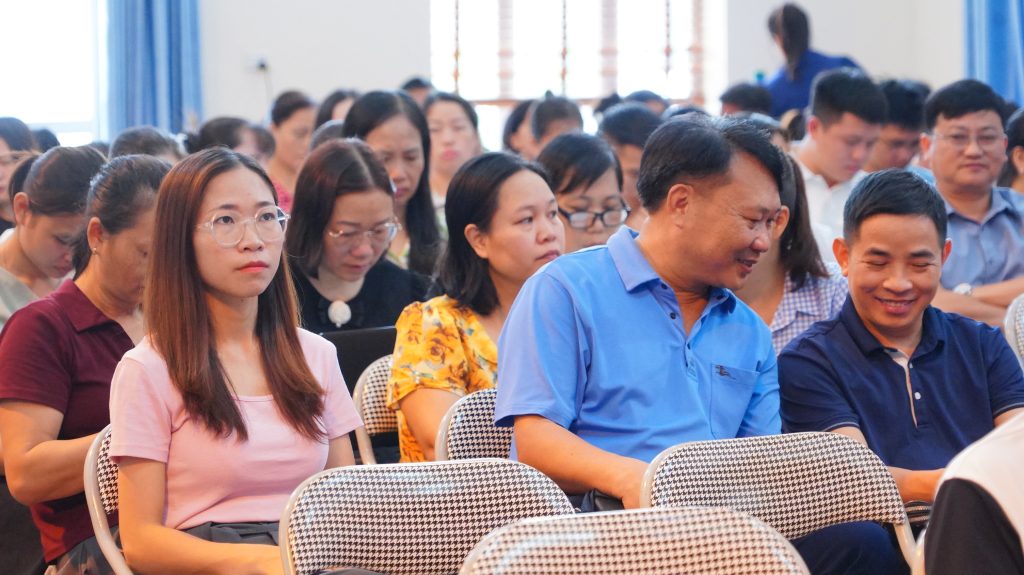
During July and August, 2026, International School – Vietnam National University, Hanoi (VNU-IS), in coordination with the People’s Committee of Ninh Xa Ward, Bac Ninh Province, organized a training program on digital transformation and Artificial Intelligence (AI) for administrative officials, part-time neighborhood group officials, and teachers from kindergartens, primary schools, and lower secondary schools in the area. The program was recognized as an innovative approach to professional development, bringing digital knowledge and skills directly to the ward-level community.
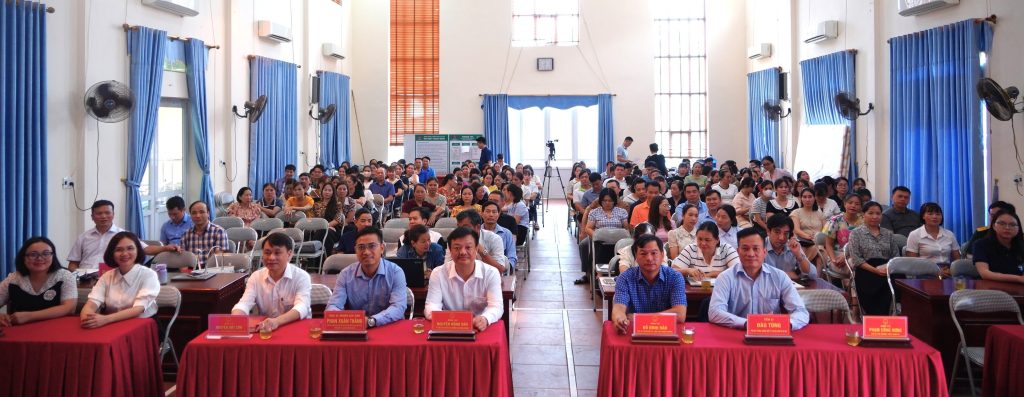
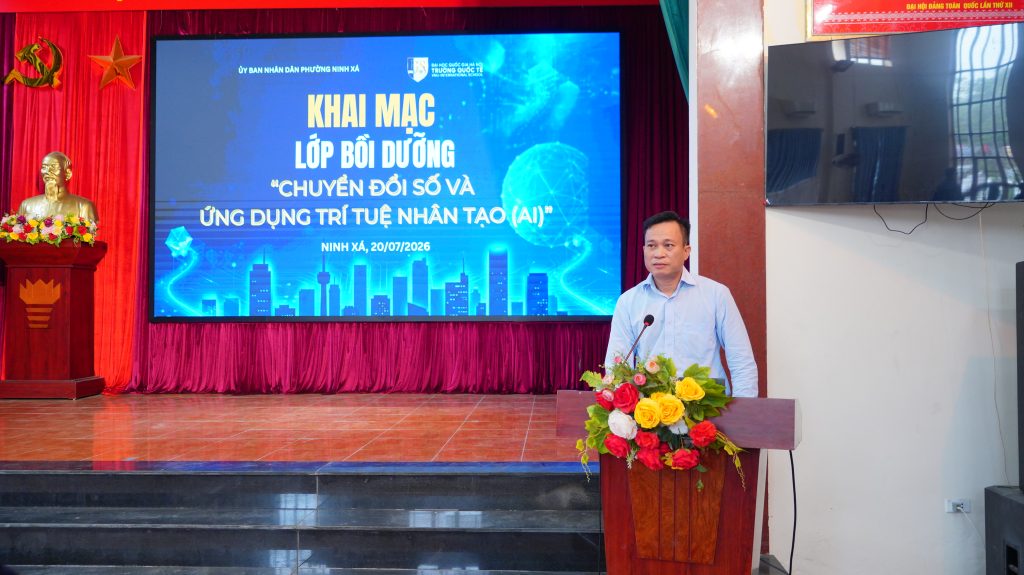
At the Opening Ceremony on July 20, Dr. Dao Tung, Vice Rector of VNU-IS, emphasized that AI serves as a modern technological assistant that can save time and improve the efficiency of handling practical tasks. Dr. Dao Tung affirmed that equipping teachers with digital knowledge and skills is not only a professional responsibility, but also the School’s social responsibility toward the community.
“This training program focuses on practical application, encouraging participants to actively interact, ask questions, and address specific challenges arising from their daily professional work. In this way, the training sessions not only introduce new technologies in line with the Government’s policies and directions, but also affirm the school’s commitment to accompanying and supporting the community in accessing digital knowledge.”
— Dr. Dao Tung, Vice Rector of VNU-IS
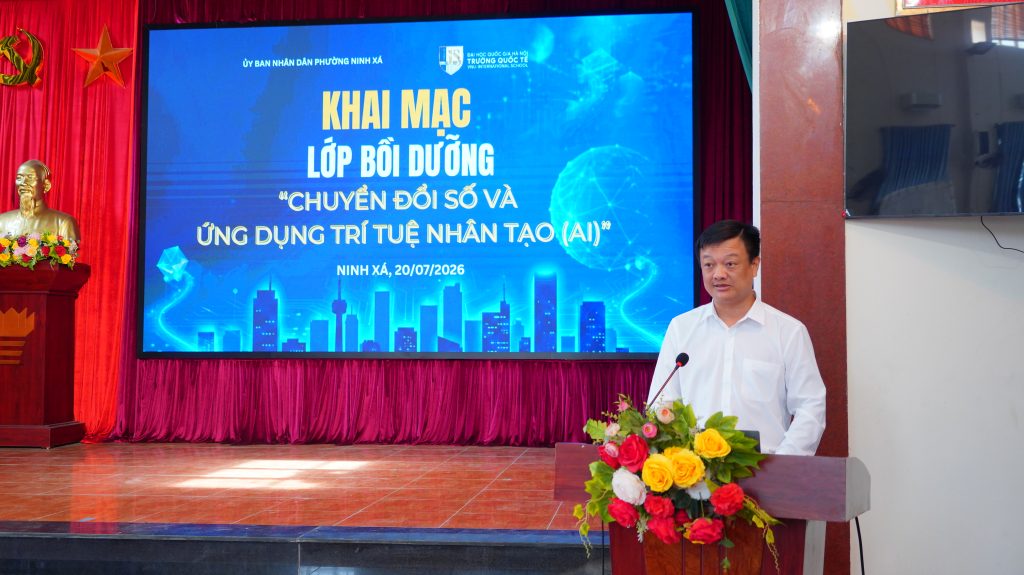
In his response speech, Mr. Nguyen Hong Van, Standing Committee Member and Vice Chairman of Ninh Xa Ward People’s Committee, expressed his pleasure and honor at welcoming officials and lecturers from VNU-IS to deliver training on digital transformation for teachers across educational levels in the ward. Mr. Nguyen Hong Van outlined the principles governing participation in the training for both lecturers and learners, and expressed his hope that participating teachers would gain valuable and practical knowledge from the program.
The training program was designed to meet the specific professional needs of teachers at different educational levels in Ninh Xa Ward, with a focus on knowledge and tools that can be immediately applied to daily teaching activities. Key topics included an overview of digital transformation and its applications in education; an introduction to generative AI and tools such as ChatGPT, Gemini, and NotebookLM; prompt-writing techniques and methods for verifying AI-generated outputs; as well as data protection, respect for copyright, and the ethical and responsible use of AI.
Regarding digital transformation in education, teachers were introduced to current digital transformation trends, the role of technology in innovating teaching methodologies, and ways to leverage digital platforms for lesson preparation, classroom management, and communication with parents. Importantly, the content went beyond theoretical concepts and was closely connected to practical situations in schools, enabling teachers to clearly understand how technology can be integrated into different stages of the teaching process—from lesson planning and classroom activities to monitoring and assessing students’ learning outcomes.
In terms of AI applications, teachers were guided in using AI tools to support lesson design, create engaging content, personalize teaching and learning activities, and improve the efficiency of their professional work. The training sessions were designed to be dynamic and visually engaging, enabling teachers to explore the tools and practice their application directly in class.
A key feature of the program was its strong emphasis on hands-on practice, which accounted for a substantial proportion of the training time. Rather than simply listening to lectures, participants directly worked with AI tools, wrote prompts themselves, evaluated the generated outputs, and refined them to create products relevant to their subjects and educational levels. Practical exercises were closely aligned with teachers’ actual needs, including developing assessment questions, preparing lesson plans, creating personalized worksheets, and designing technology-supported group activities. As a result, upon completion of the training program, teachers are expected to feel more confident in applying the knowledge and skills acquired to their daily teaching activities.
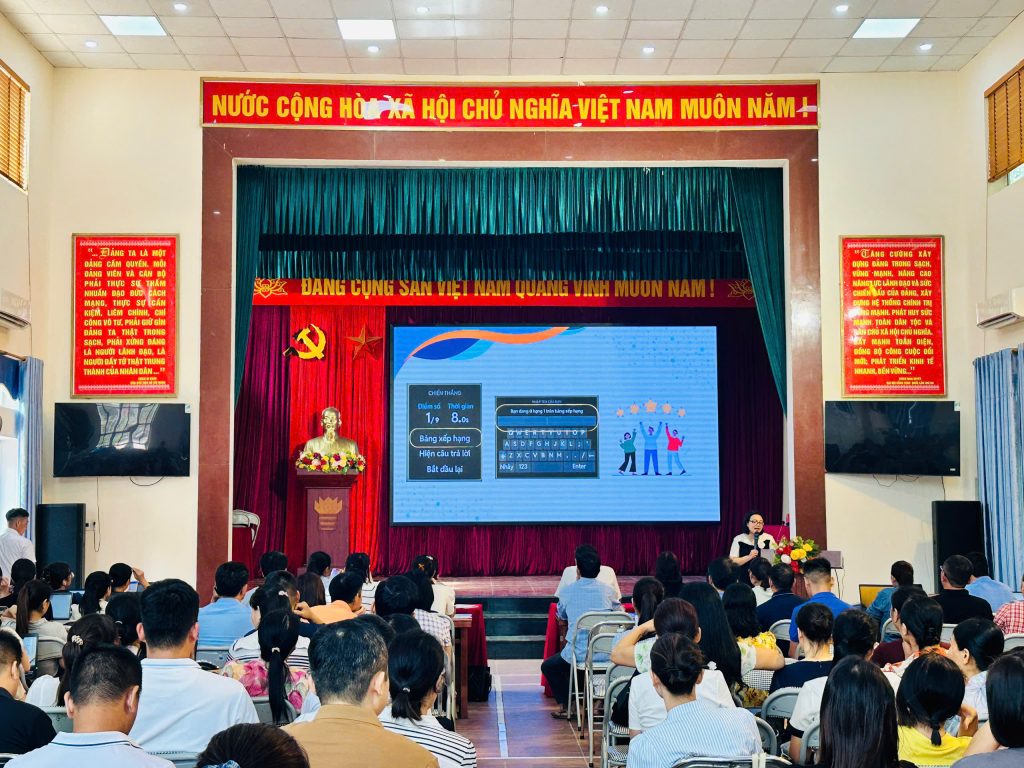
The “Digital Literacy for All” movement, launched by the Party and the State, aims to provide the entire population with knowledge and skills related to digital transformation, building on the spirit of the mass literacy campaign initiated by President Ho Chi Minh in 1945. In 2026, the movement is being implemented nationwide, with the goal of narrowing the digital divide and enabling people to effectively access and use digital platforms and services in their daily lives and work.
Against this backdrop, the collaboration between VNU-IS and Ninh Xa Ward People’s Committee to organize training on digital transformation and AI carries particular significance. When teachers are equipped with digital knowledge and AI skills, they not only have the capacity to innovate their teaching methods, but can also become “digital champions” who inspire students, parents, and the wider community to engage with digital technologies.
This represents a practical and sustainable way to realize the goals of the “Digital Literacy for All” movement: starting with teachers, spreading to learners, and ultimately becoming embedded in the daily lives of the wider community.